Eating Muffins

Halme Polvinen Family Collective. You will all be assillymated

  • Joulukuun toinen 2019

    Posted by jukkahoo

    Today's beverage is… PEPSI MAX CHERRY! Because it is back. Though, was it ever away? Who knows. In any case, few months ago, our local purveyor of goods (S-Market Takomotie) stopped stocking this semi-nectar. Suddenly the shelves were empty  and the price tags were removed. Clearly the soda had a solid purchase base and there was no reason to dump it for any other seasonal flavour (like dreaded rasperry or that weirdo cinnamon Coke), but apparently powers that be had done so. 

    And then you saw the same thing happening in other shops. Followed by sales of the stuff, which surely meant it was all over. *snif* Sigh. We had a good run. I never expected to be able to enjoy our relationship for more than a season or two, a year tops, but we had a couple. Good times. 

    But evidently things have changed, as bottles are on the shelves at S-Market, and the product info is back at the Hartwall pages

    In other news: Everyone has gone batshit crazy and the planet is doomed. Nothing really new then. Politicians are corrupt asswipes and media full of vengeful idiots. It's all very depressing. Pitäkää tunkkinne. 

  • Joulukuun ensimmäinen 2019

    Posted by jukkahoo

    It's been a while since I last posted anything here. Apparently blogging is dead and while this may not be the whole truth or nothing but the truth, or whatnot, my days of active, or even semi-active blogger are well past. Various social medias are more than able to fill that void. 

    This Xmas calendar has been a Thing for couple of years and while the stats tell me that we are far away from the traffic of yesteryears (well, nothing rates as well as a looming demise of the main character and since there is no sign of cancer around, I'll settle for less), there seems to be Some people who come by, take a look and be on their merry ways after. Happy to have you! 

    I was planning on doing as little as possible. "Oh, again", they say. A beverage of the day, perhaps a review and a link to something I found amusing or interesting. Or even informative. 

    First beer is Suomenlinnan panimo's Gethe Sour. Like many, I have found sour beer (this year, or last?) and been pretty delighted about that. They are usually interesting and as I have been less inclined to drink lager, or in fact most other beers that people would normally associate as beer, sours have been more than welcomed by my palate. 

    This is a nice little sour, lighter than most, not very tart but it has a nice nose and the scent of fruitiness. Apparently hibiscus. At 4% it is easy drink and something I will definitely look for in the future, as it is just a very nice little beer. 

    I felt it necessary to watch Blade Runner last month, as it was November 2019. BR is still a very good movie, but while it pains me to say it, probably not as great as I remembered. There's still oodles and bundles of brilliant film-making, visuals and acting. It's just that I also heard some lazy dialogue and unnecessary pathos that irked me. And some really 80's auteurism. 

    But we still have a great film here, one of the best the genre has to offer. Unlike the 2049 one. If that would be just a film, with no ties to the original, there might be a really interesting film somewhere, but as a reply or reverberation on Blade Runner, this is… too clean, too staged, too expensive. It should've been scruffier and a bit chipper. Now, Blade Runner is no fun fest, but it has a bunch of laughs and a really funny scene with Harrison Ford and Joanna Cassidy in latter's dressing room. There are quips and lines that elicit humour and action at the same time. BR2049 has none of that. It's a languishing, sad poem of a movie. And yeah, a bit too long, too. It could've been a contender. 

    But the prologues are great, they look and feel like the original. 

    In other news, we taped an episode of Tähtivaeltaja podcast with Aleksi today. Talked about Blade Runner(s) and criticism, as well as mentioned couple of books and tv-series – as we do. In Finnish, so there's that. Though there is the short one in English I did with Tade Thompson at Eastercon. Check that one out. 

  • James M McPherson: The Battle Cry of Freedom

    Posted by Sari

    Yhdysvaltain sisällissota voittaa selvästi sisällissotien googletaistelun – muut sisällissodat Marvelin ehkä typerimmästä tarinakokonaisuudesta ikinä puhumattakaan  jäävät kauas taakse. Sodan tapahtumat, syyt ja seuraukset, elävät edelleen yhdysvaltalaisten eri identiteeteissä, eivätkä historioitsijat edelleenkään ole yksimielisiä siitä miksi sota syttyi, saatikka mitä siitä seurasi.

    Kyseinen sota lienee tutuin suurelle yleisölle Ken Burnsin aikanaan kaikki katsojaennätykset rikkoneesta dokumenttisarjasta, joka yhdentoista tunnin aikana käy lävitse sisällissodan tapahtumia valokuvien, aikalaistodistusten ja aikakauden musiikin avustamana. Asiantuntijoita se käyttää suhteellisen vähän, ja niistä eniten Shelby Footea, karismaattista kirjailijaa, jonka kolmiosainen sisällissodan historia nojaa pitkälti Etelävaltioiden hellimään kuvaan sodasta ja jälleenrakennuksesta aikakautena, jossa ylväs herrasmiesten etelä hävisi sodan resurssien puutteessa barbaarisen teollistuneen pohjoisen marssiessa heidän maidensa ja kulttuurinsa yli.

    Dokumentin kohdeyleisönä ovat myöskin hyvin selvästi valkoiset amerikkalaiset. Vaikka Frederik Douglassin romanttinen profiili ja hänen kirjoituksensa tulevat sarjassa tutuksi ja professori Barbara Fields pääsee kertomaan sodasta orjien näkökulmasta, keskittyy dokumentti kuitenkin loppujen lopuksi yksittäisiin valkoisiin henkilökuviin, ystävien ja sukujen jakautumisen dramaattiseen ironiaan, kenraaleihin ja heidän taisteluihinsa. Sota on dokumentissa Footen sanojen mukaan perheriita, ja tämä rajoittaa kovasti tulkintaa ja näkökulmia. Kun Burns zoomaa etelävaltioiden ja unionin sotilaisiin muistelemassa yhdessä menneitä Gettysburgin taistelun 50-vuotisvuotismuistopäivän kuvissa, luo hän lohduttavan mutta ei kovinkaan totuudenmukaisen kuvan sodasta, jonka vaikutukset näkyvät edelleen. Ja silti etelässä protestoitiin dokumentin toistavan liikaa pohjoisen sotatulkintoja.
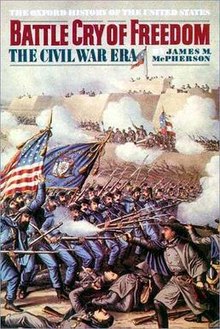
    220px-Battle_Cry_of_Freedom_(book)_cover Hiukan ennen dokumenttia, professori James M McPherson Princetonin yliopistosta julkaisi sisällissotaa käsittelevän teoksensa ”The Battle Cry of Freedom” osana Oxford University History of United States -sarjaa. Tämä Pulizer-palkittu opus on edelleen, kolmisenkymmentä vuotta jukaisunsa jälkeen suosituin yksiosainen sisällissodan historia. McPherson, joka on julkaissut kymmeniä kirjoja sisällissodasta ja on eittämättä tämän hetken arvostetuin sodan asiantuntija, ei tunne sympatiaa ”Lost Cause” -selityksille. Artikkelissaan ”The Long-Legged Yankee Lies” vuoden 2007 esseekokoelmassaan ”This Mighty Scourge”, McPherson jäljittää suorastaan hyytävästi, kuinka etelävaltiot kirjoittivat sodan uudelleen koulukirjoissa. Battle Cry of Freedom antaa myös huutia sille väitteelle, että Etelävaltiot erosivat unionista puolustaakseen osavaltioiden itsemääräämisoikeutta. Orjuus oli se kysymys, joka nousi osavaltioiden oikeuksien edelle, kuten vuoden 1850 karanneiden orjien palauttamista koskeva laki osoittaa. Osavaltioiden oikeudet -argumentti, McPherson kirjoittaa, oli aina enemmänkin keino jonkin muun tavoitteen saavuttamiseksi kuin itseisarvo.

    Kun Yhdysvallat oli laajenemassa länteen, ja Etelävaltiot jäämässä selkeästi jälkeen pohjoisesta erityisesti teollistumisen moottorina toimineesta liikenteen vallankumouksessa, alkoivat kulttuurilliset ja aatteelliset erot etelän ja pohjoisen välillä tulla yhä selvemmiksi. Mikäli uudet osavaltiot liittyisivät unioniin ei-orjaosavaltioina, menettäisivät etelävaltiot selkeästi asemaansa liittovaltion lainsäädäntöelimissä – asemaa jota oli tähän asti avittanut se että väestönlaskennassa orjan laskettiin vastaavan 3/5 vapaata kansalaista ja näin 4 miljoonaa etelän orjaa lisäsivät etelävaltioiden edustajainhuoneen edustajien määrää. Lisäksi vaikka suurin osa pohjoisvaltalaisista ei välittänyt etelän orjien kohtalosta tuon taivaallista, orjuuden vastustajat kävivät vuosi vuodelta äänekkäämmiksi ja niin traagiset tarinat orjien kohtaloista etelässä kuin palauttamislain voimaantulon jälkeiset oikeusjutut lisäsivät abolitionismin suosiota. Näin jo Yhdysvaltojen perustamisasiakirjoihin leivottu jännite laukesi lopulta aseelliseksi konfliktiksi Abraham Lincolnin vaalivoiton myötä.

    Yhdessä asiassa McPherson on samoilla linjoilla Burnsin dokumentin kanssa. Kirjan keskiössä on sisällissodan sotahistoria. Toki poliittinen toiminta, sodan talousvaikutukset ja sosiaalihistoriakin tuodaan kaikki esille, ja ensimmäiset luvut sotaan johtaneesta kehityksestä ovat erinomaisia, mutta painopiste on silti sotahistoriassa.  Amerikkalaisten upseerien koulutus, heidän edellinen käymänsä sota (Meksikon sota 1846-48) ja sodan alussa yleisimmät aseet – rihlaamattomat musketit – merkitsivät, että varsinkin sodan alussa katsottiin taaksepäin kohti Napoleonin sotien taistelutaktiikkaa. Gettysburgin taistelun ”Picket’s Charge” kuulostaa kovasti romanttiselta ryntäykseltä kohti vastustajan linjoja. Tosiasiassa sotilaat marssivat tarkoin harjoiteltuina muodostelmina ja rumpujen tahdittamana kohti ylemmäksi muurin taa linnoittautunutta vihollista arvattavin seurauksin.

    Kuten sodassa aina, sotatekniikka kehittyi. Rautateiden ja jokien käyttö logistiikan apuna, rihlatun kiväärin yleistyminen ja  rautakylkiset joki- ja rannikkoalukset muuttivat kaikki sodankäynnin luonnetta. US. Grantin miehet eivät olleet millään tavalla rakentaneet tai kaivaneet varustuksia leirinsä ympärille Shiloh’ssa vuonna 1862 ja tulivat Albert Sidney Johnsonin ja P.G.T.  Beauregardin joukkojen yllättämäksi – jos nyt ei ihan aamukahvia nauttiessaan niin melkein. Gettysburgissa 1963 Little Round Topin huipulla pohjoisvaltioiden rintaman vasenta laitaa puolustanut Joshua Chamberlain johti joukkonsa koulukirjamanööveriin hyökkääjiä vastaan ammusten ollessa lopussa: hän komensi vasemman laitansa hyökkäämään pistimin kohti vihollista suuressa kaaressa kuin ovi, joka kääntyy saranoillaan.

    Overland campaign Virginiassa 1864 oli aivan toisenlaista sotaa: Lee kaivautui asemiin, jota Grantin sotilaat eivät onnistuneet valloittamaan. Grant lähti kiertämään Leen asemia ja estääkseen armeijaansa joutumaan saarrokseen, Lee liikkui uuteen paikkaan Grantin tielle ja linnoittautui sinne. Sodan loppuvaiheissa olisi tuskin tullut kuuloonkaan, että armeija ei kaivautuisi asemiin joka kerta kun pysähtyi.

    Battle Cry of Freedom on erinomainen perusteos, mutta toki välttämättä kirjoitusajankohtansa näköinen. Kolmenkymmenen vuoden aikana on sisällissodasta julkaistu valtava määrä lisää tutkimusta – Helkasta löytyi sopivasti esimerkkinä käytettäviksi peräkkäin julkaisupäivämäärän mukaan teokset ”Sex and the Civil War” ja ”The Religious Life of Robert E. Lee”. Uuden tutkimuksen myötä sisällissodan tutkimukseen on löytynyt uusia näkökulmia, jotka täydentävät kokonaiskuvaa ja hilaavat sitä pois liiallisesta painotuksesta sota- ja henkilöhistoriaan. Silti, harva miehen (tai naisen) ikään ehtinyt historiateos on säilyttänyt asemansa yhtä hyvin kuin McPhersonin opus.
  • Year 2018 in Books

    Posted by Sari

    We sort of thought that the New Year's Eves during which Jukka is working were behind us, but no such luck: someone fell ill, and the boss has to fill in. So here we are, after a nice evening with my sister and her husband, the dogs are sleeping and I am whiling away the time so we can go and get him. If the weather does not worsen suddenly. Can I just by the way say how wonderful it is that I this time the chance has given me dogs who are not afraid of noises. I don't have to sit in the bathroom with radio on writing this. But to business:

    I continued to try to read one book a week, so 52 was my goal. This year I beat that easily with 75 books read for pleasure. Somewhere around 46 of them fitted into Lonkeropiirakka's SF reading challenge which I wrote about in the form of Advent calendar. Few non-fiction works I blogged separately (in Finnish).

    Those I have not written before I want to mention Jo Walton's Necessity. I have been reading Hannah Arendt (for work so not included here), and getting to grips with the concepts of freedom and necessity, which makes me want to re-read Walton's trilogy which is a really cool actual take of fantasy as a simulation game for philosophy: what if platonists picked up from all over history really tried to create Plato's republic.

    Laura Thompson's The Six was another Mitford biography, this one more sympathetic towards Diana than some I have read but either I have read too much about Mitfords or this really was a bit light weight. Which you can't say Fredrik Logevall's excellent book on the war in Indochina before Americans got involved: The Embers of War. Reading that before two other Vietnam books (Mark Atwood Lawrence: The Vietnam War: A Concise International History and Gary R Hess: Vietnam: explaining America's Lost War) did put the later war into proper perspective.

    This years reading included some re-reads: Susan Cooper's The Dark is Rising, Lois Bujold's Civil Campaign and Megan Whalen Turner's The Thief. All among my ultimate comfort reads. I also read Turner's Thick as Thieves, the latest addition to Queen's Thief series. It was an entertaining adventure and it was nice to see Costas from someone else's point of view, but really I am just waiting for the next and last installment out in March.

    So that was my year 2018 in books. Lets see what the new year brings!


  • Advent calendar 2018 – 24.12

    Posted by Sari

    Huh. Got it done! There were a few books I had to read quickly and they did not grab me so it welt a chore, but in all honesty, I might have not read them at all without this challenge, and I do feel richer for doing so. All in all, a great challenge and I enjoyed doing it!

    Category 19, A Hugo-winning Novel: Ursula LeGuin: The Dispossessed

    DipossessedI read the dispossed durig my golden age of science fiction, and have only vague memories of a fence, the rough life on Anarres and parties on Urras. So re-read was obviously in order. It is the story of a physicist Shevek, born and raised on the anarchist society on Anarres. Shevek is the first person for centuries to travel to Urras, their former home planet, still divided to nation states with either capitalist of totalitarian systems of government. The differences of culture and society make him in the end join a revolutionary protest and eventually return to Anarres, though alternating chapters of his youth and life on Anarres  makes it clear he has grown disillusioned with that world also.

    It is a great political novel. Some things remind of the fact that it was written in 1974: the binary thinking enforced by taoist ying and yang, and the second wave feminism that informs it are most clear indicators. But the thoughtful way the societies are depicted, the acknowledgement that they are not static, and the way Shevek reacts both to his austere home and the abundand Urras work still well. Also the structure mirroring the societies and Shevek's experiences is work of genius. Maybe next I should try Word for World is Forest, which has also languished on the shelf since I was about 12. After all, as the craven capitalist society of A-lo seems now more familiar than ever, it would be interesting to see how modern enviromentalism would inform re-reading the Word for World.

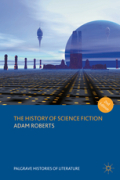
    Category 14, a Non-fiction book about SF: Adam Roberts: The History of Science Fiction

    HistoryofAdam Roberts, or especially in this context, Professor Adam Roberts, has an enviable talent to pull together things that for the first glance have nothing to do with each other. Take Kant's Critique of Pure Reason, the SF horror movie The Thing and the Fermi paradox. Who else would have taken all these things and written The Thing Itself, stylistically masterful and most science fictional science fiction novel published in years.

    This is the second edition of his History of Science Fiction, published in Palgraves Histories of Literature -series. It is a comprehensive look at the history of Science Fiction from ancient times to this day. Roberts' thesis is that Science Fiction as a genre was (re)born with the reformation and the 17th-century  scientific revolution – a view I as a historian of the 17th-century have lots of sympathy with. Copernican system of the world, the scientific method, the protestant emphasis of individual (salvation) and the willingness of protestant states to at least tolerate new knowledge, and the gradual acceptance of new and future as something that might even be better than past all make this a persuasive argument. With this in mind, it is understandable and necessary from the point of view of what constitutes science fiction, that third of the book is preoccupied by pre 20th-century fictions.

    Roberts' assured knowledge not only of the genre but literary history in general, his engagement with SF-community, and his  facility to do interesting readings on individual authors and movements makes this irreplaceable tool for researchers and a stimulating read for anyone intereste in the genre. I particulary enjoyed his take on early 20th-century modernist SF and its links to the ideas that also birthed fascism.


    Longjing

    IMG_20180118_084800The most famous of the Chinese green teas, Longjing or dragon tea truly is the king of teas. It has a wonderful delicate taste and the aroma when you wake up the leaves with hot water is wonderful. This, like oolong, I prepare gongfu-style but instead of a clay pot I use gaiwan, a china cup with a lid to brew the tea. A perfect cup for Christmas Eve morning when the ham is out of the oven mashed potato casserole is going in and before kitchen turns into a war-zone.

  • Advent calendar 2018 – 23.12

    Posted by Sari

    Category 42, SF book with a cat in it: Nishi Shawl: Everfair

    EverfairEverfair could also have been in the steampunk category. Or alternate history category. It is a story about how idealist westerners (evanglical americans, british fabians) found the nation of Everfair in Belgian Congo. They ally themselves with a local king, and by the power of aircanoes and other steampunky  technical inventions by chinese indentured railway worker they manage to keep King Leopold and other western powers away. In time, however the tensions between European residents of Everfair and native Congolese rise, and protecting their nation becomes ever more difficult.

    This is an incredibly ambitious novel. Steampunk is literature of the empire, and the fun of dirigibles and clockwork engines often mask the fact that pith-helmeted Europeans drew the profit and culture of 19th century out of the backs of the native populations. So writing a proper post-colonial steampunk novel is a great thing in itself. Sometimes Everfair works brilliantly. At the beginning is an isnpired depiction of how one of our main characters, Lisette Toutournier finds cheap escape and freedom pedalling her bicycle. In the next chapter we are confronted with the human suffering that was caused to make the rubber in the tyres of Lisette's bicycle. The connection is clear but not belaboured.

    Some things are just stuff you did not think of: Everfair takes part in the First World War, but naturally on the side of Central Powers. How could they fight on the same side as Belgium? It is not wholly succesfull, however, the story disintegrates a bit towards the end, and the powerful imagery does loose some of its tension. Even so, it is a novel defenitely worth your time. It is in this category, because one of the characters, Fwendi, can transfer her consciousnes into cats.


    Category 24, An SF book by an author who has been a Guest of Honor at Åcon: Emma Newman: After Atlas

    AfteratlasThe second novel by Emma Newman on this list, After Atlas, is set on Earth after Atlas, the space ship that carried the colonists of Planetfall to their destination, has left. The main character is dedective Carlos Morano whose mother left with Atlas leaving her infant son behind. In a world controlled by amalgamations of corporations and countries, he is an indentured servant, practically a slave serving out a sentence getting longer every time he breaks a minor rule.

    It is a brutal but believable future, the mystery Carlos is trying to solve unfolds just like it should in a detective story, and the themes of parental relationships and mental health are there like in the other novels. But the brilliance of the novel is

    – SPOILER SPOILER SPOILER –

    how Emma lulls as all into believing this is a detective story with a detective story's ending: the detective has the power and will solve the crime. This is what Morano believes and this is what we believe. So when the ending of the story wrenches all the power from Morano, reduces him to the slave he always was it becomes as a real shock. Our experience of the novel is thrown as off kilter as Morano's life. It is incredibly powerful and disconcerting ending.


    Forsman Pu-Erh

    Pu-Erh is the most famous of fermented teas. It is really dark, and comes in discs you chop with something sharp to get a suitable amount of tea leaves for your cuppa. Pu-Erh is earthy, dark and supposedly has lots of health benefits. Forsman's does not feel (or taste) like true Pu-Erh, this is sold already chopped to pieces and looks pretty much like any  loose leaf black  tea. But there is some of the earthiness of Pu-Erh in the taste, it is like a milder cousin of the real thing.


  • Advent calendar 2018 – 22.12.

    Posted by Sari

    Category 22: An SF Novella: Aliette de Bodard: The Tea Master and the Detective, Sarah Gailey: River of Teeth

    Novellas have been en vogue now for few years. They are easy to read on e-readers, and publishers such as tor.com and PS publishing have issued beautiful book editions of original novellas. But with the popularity there has been some developments that i find annoying. Specifically, an increasing numbers of novellas have cliff-hanger endings or are otherwise clearly part of a continuing saga. I have no problem with novellas situated in a same world or even with novellas with same characters. But if you can't fit your story into a novella, write a godamned novel – do not make audience to buy it piece by piece. Or worse yet, publish first as novellas and then collect the bits into a novel. With some extra material, so people buy them all.

    The_tea_master_and_the_detective_by_aliett_de_bodardFirst one of my picks, The Tea Master and the Detective is part of Aliette's vietnamise-inspired Xuya-universe, and is the second loose re-telling of the Study in Scarlett on my list. Here Watson, Shadow's Child,  is a veteran mindship, discharged from the service and Holmes is Long Chau, an abrasive scholar in search of a body.

    Like pretty much everybod, I loved The Tea Master and the Detective. The worldbuilding is great, the Holmes pastiche clever and not too front and center, and the story has narrative force and is just the length it needs to be. Brilliant. 

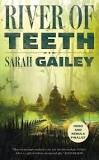
    RiverThe other Novella I picked for this category – there were many others – is Sarah Gailey's River of Teeth. It is a hilarious high-concept thing: A werstern in the Mississippi delta where cowboys ride hippos. If that sounds mad, please remember, that there was an actual scheme to introduce hippos to Louisana bayous as cattle in the 19th-century.

    Winslow Houndstooth is a hippo wrangler, they and their crack team is hired to catch ferocious feral hippos. There is also a river boat with gamblers, a dam to keep hippo's from getting further out of countrol, gunslingers, gansters and climactic scene at the end. I liked a lots of things in this one. The story is mad, the main characters are all genders, the hippos themselves are both  extremely adorable and vicious beasts, and the Gailey uses the tropes of western excellently. The only reason this was number two on my Hugo ballot instead of number one is, that it ends in a cliffhanger and thus in my opinion is not a real Novella.

    Yogi Throat Comfort

    When you have a sore throat and want something warm, tea  is a traditional choice. The warmth makes it feel good, but I find that actual tea sort of dries the throat, even with honey. This infusion does not taste that good, but it does work on sore throat. It is made out of Licorice root, slippery elm bark, fennel and orange peel. Slippery elm is supposed to have all sorts of health benefits, believe that if you will, but this mixture does really help with irritation in the throat. Which is good because – as I said – the taste is funky. I think it is the licorice and fennell which throw the taste off so that it is a bit weird.

  • Advent calendar 2018 – 21.12

    Posted by Sari


    Category 22: A book with a non-human main character: C.J. Cherryh: Conspirator (Foreigner 10)

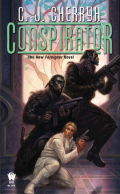
    ConspiratorI told you I binge-read lots of this series in last winter. This one fits the category as in addition to Bren Cameron's point of view we also get that of Caijeri, son of the Atevi leader who has been trusted to Bren's care. Caijeri is an adventurous teenager, has spent two years in space with humans and is finding it difficult to readjust to life on Atevi homeworld, especially as his father has just defeated a coup, and he is being watched extra-carefully.

    I would, perhaps, wanted the Atevi perspective to be a little stranger, now Caijeri's age and his experience make him more like a mediating character than truly alien. But this was otherwise an OK part of the series, though I think at this point I was getting a bit glassy-eyed and beginning to have trouble differentiating one book from another. 


    Category 23: A novel which has won Kuvastaja Prize: Anni Nupponen: Nainen ja kuningas

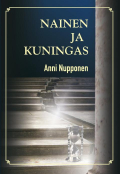
    NainenjakuningasA healer falls in love with a king in a fantasy land where roles are strictly defined, and which is at war.  The men are away fighting for long stretches of time, and the the war is beginning to take its toll on the civilian population.

    You should know by know how picky I am with Finnish fiction, so when I say this was better than I expected, that is actually a big thing. Again, we have the first person narrative which I – as you know by now – am not a fan of. Here there was the added problem, that the narrator could never articulate why she fell for the king, who was an asshole, especially as king's best friend was there as a potential romantic interest and seemed like a decent guy. The story of war an its effects on home front was interesting, and even if the ending was clearly coming, it was effective. But I found the chcaracters apart from Eelis one dimentional, and Eelis herself I personally found annoying. There was effort, and originality, and the language was thoughtfully crafted, but in the end it just fell flat for me.


    Tea, Earl Grey, Hot

    The geeky tea! The classic tea. The tea I grew up with: the only tea-drinker in the family – my grandmother – drank it. This is Twinings loose leaf Earl Grey. I love Earl Grey, the bergamot gives it a very distinctive flavour. You can intensify the citrus with a twist of lemon. Temperature 95 or over, steep for few minutes.


  • Advent calendar 2018 – 20.12

    Posted by Sari

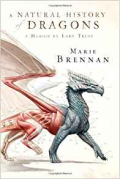
    Category 40, A book with mythical animals: Aliette de Bodard: In the Vanishers' Palace; Marie Brennan: The Natural History of Dragons

    The mythical animals in these books are dragons: Aliette's has an eastern inspired dragon: sentient, magical and able to take human form. In Brennan's novel the dragons are beasts studied by naturalists.

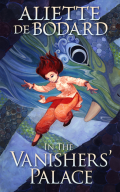
    Vanishers palaceIn the Vanishers' Palace tells of Yên, sold to the dragon Vu Côn in exchange of the dragon's healing power. Instead of death and torture, she is given the task to teach Vu Côn's children. They all live in the Vanishers' Palace, an abode left behind by vanished alien people who have left the world – and the palace -  shattered full of viruses and other dangers. 

    This is a post-colonial re-telling of the Beauty and the Beast – with a library scene, even – but between a human woman and a female shape-shifting dragon. It is beautifully written, the world-building is superb, and the characters engaging. I loved the story, the way the story used Viet culture and especially the way it engaged with colonialism and the damage it has done to the colonized societies. 

    DragonsI bought Marie Brennan's The Natural History of Dragons some time a go from SF bokhandeln on one of our periodic trips to Stockholm, but it had languished unread on the shelves for some time. As the series was nominated for a Hugo this year, I decided it was a high time I read it. And I am very gland I did. It was a charming alternate history set in a 19th-century Europe but with tweaks in the culture. And dragons.

    Isabella, Lady Trent is the foremost naturalist on dragons, and the novel is her memoirs of her youth and first encounters with dragons in a vaguely eastern-european country of Vystrana with her husband Jacob. I loved the period details, I loved the dragons, and for once the first person narrative did not bother me at all, Isabella was a narrator I felt comfortable with.  It is a great thing to contemplate that I have many more books in the series to read. Joy.

    Assam Orthodox

    Orthodox is the higher quality of the Assam-teas from India. It is harvested usually by hand, and uses only the smaller, delicate leaves from the tips of the bushes. It is a lovely black tea without any hint of bitternes. Water brought just to a boiling point, and steep for 1-2 minutes, and you get a flavourful cup of indian tea. 

  • Advent calendar 2018 – 19.12.

    Posted by Sari

    Category 17, SF Manga: Planetes

    PlanetesIf I am not a great fun of comics in general, I am even less a fan of Manga and Manhwa. The whole visual vocabulary justs turns me off: the eyes that go from small to big depending on the situation, the huge screaming mouths, the drops of sweat signifying somehting or other… I have tried all sorts of Manga multiple times, but I do think it is time to just give up and admit that it is a geeky thing that just is not for me. (Not a big fan of anime either apart from Sen to Chihiro no kamikakushi, which is still the best fantasy movie ever.) So not a great category for me. Luckily Jukka had bought Yukimura's Planetes in Finnish at some point, so I decided to grab part one, and try it.

    Planetes is set in about 50 years into the future. The Moon has been colonised, and people have landed on Mars. Down side is that the orbit is full of dangerous trash, and thus we have ships whose job is to pick it up. There are also terrorists who want to make humankind withdraw from space. The Manga tells the story of a three person crew manning a trash collecting ship. The story is quite good, and worldbuilding excellent. If it was a novelI think I might like it a lot. Or even if it was a live action movie. Now I spent most of the time trying to find out which character is which.


    Category 41, A number of SF magazine: Tähtivaeltaja 3/2018

    TahtivaeltajaTähtivaeltaja is the magazine of Helsinki Science Fiction society. It has come a long way from its trashy punk-origins and is nowdays quite a sleek publication, but it still has that counter-cluture vibe that makes it unique among Finnish SF magazines. I occasionally review and translate stuff for Tähtivaeltaja, so I am a bit biased, but it is an excellent mag. It maybe publishes less Finnish short fiction than other magazines, but is great at introducing new rising international stars to Finnish audiences.

    In 3/2018 that treatment is reserved to Kameron Hurley, there is an article about her, a short story and her hugo-winning essay Women have always Fought. A nice package which gives you a well-rounded picture of Hurley as an author, essayist and activist. There is also an introduction and short story by Finlandia junior winner Siiri Enoranta, and a short story by Edmund Schluessel. As usual, there are great amount of reviews comics and movies, something Tähtivaeltaja has always focussed on. The cherry on top is Petri Hiltunen's and Nalle Virolainen's profound interrogation of the role of the cat Jones, in Alien.


    Nordqvist Sadepäivän ilo

    Aromised tea with strawberry, cherry, raspberry and pineapple flavours. Raspberry and strawberry are dominant, and again, the taste is a bit soapy. It had been dark and rainy all day when I wrote this, so it was an appropriate choice – sadepäivän ilo means rainy day's joy.