Eating Muffins

Halme Polvinen Family Collective. You will all be assillymated

  • Advent calendar 2018 – 8.12

    Posted by Sari

    Category 9, A book situated in Praedor universe: Petri Hiltunen: Kuninkaan lapset
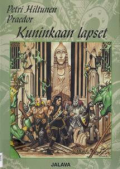
    0_7378044194858937530I still have an instinct of mispronuncing Praedor (I want to say [pre:dor]  but I have been told it should be [praedor], with a dipthdong that sounds distinctly savonian to me. Or maybe there is a syllable break there? [pra.e.dor]?). This universe was created by comic book artist Petri Hiltunen and has since had other creators playing around in it creating novels, short stories and games.

    Kuninkaan lapset (Children of the King) is a comics album, tightly told story of mercenaries entering a forbidden abandoned city to look for treasure and biting more they can chew. This is really off my well beaten path, it does remind me of Sword and Sorcery stories and Howard, but I am not that familiar with the genre that I could easily recognise the antecedents. Also it being a comic, there are those pesky pictures that interfere with the reading experience.


    Catebory 32, A book with time travel: Ian McDonald: Time Was
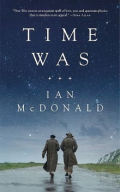
    220px-Time_Was_(2018)-Ian_McDonaldIn this novella, an antiquarian bookseller starts to trace the lives of time travelling lovers, Ben and Tom who got lost in time and separated from each other because of a science experiment during World War Two. They have communicated with each other by leaving letters in certain bookstores in between the pages of the book "Time Was". 

    This is a tightly plotted and beautiful book. The way Emmett the antiquarian slowly unravels Tom's and Ben's story via historical documents is done very nicely, though it necessarily makes him the focus of the Novella, instead of Tom and Ben. There is a nice twist in the end, and the story does not shy away from the problems faced by gay men in the past. 

    I wonder why McDonald changed the name of the novella from the "Time There Was" to "Time Was"? It is punchier, but i liked the original which, is a quote from Hardy's poem Before Life and After.


    Nordqvist: Keisarin morsian

    Propably the most popular aromatised tea in Finland, the one usually found next to plain black tea in coffee houses. Its smell and flavours of quince and black elderberry are very nostalgia inducing as I have drunk an endless amounts of the stuff during student days in various cafés in Helsinki.
  • Advent calendar 2018 – 7.12.

    Posted by Sari


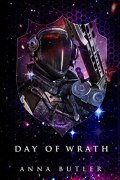
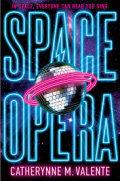
    Category 8, An science fiction book written by a woman: Anna Butler: Day of Wrath, Catherynne M Valente: Space Opera

    ButlerNow this is a category where I could have chosen a number of books, and even after slotting the candidates in other places in challenge I was still left with two very different science fiction novels. Which is great!

    Anna Butler's Day of Wrath is the fifth book in her Taking the Shield military scifi series. I buy these as soon as they come out. Butler self-publishes as e-books, which is pretty much a norm when we are talking about gay romance novels, especially those aimed at least partly for straight women. For the longest time commercial publishers were wary of publishing the stuff so writers and readers found each other in self-publishing world. Taking the Shield is definitely more mil-sci than it its romance, though the bi/gay (he identifies as gay but has sex/relationships also with women) hero does fall in love and pine and have sex in between fighting an overwhelming alien space menace. In this fifth novel the story takes a hard turn left and I am not quite sure I liked it but I am still willing to give book six a chance when it comes out.

    Space operaCat Valente's Space of Opera is a whole different animal. It is a delightful romp where Earth can only be saved by not coming last in the intergalactic Eurovision song contest, and the artist standing between Earth and its doom is the glam rock band Decibel Jones and the Absolute Zeros. I usually find Valente's intensely figurative language and her habit of describing sensations a chore, but here her unquestionable talent with words is here happily married with her paying hilarious tribute to Douglas Adams. 


    Gunpowder Tea

    Again, I have thrown away the label, so I have no recollection where I got this from, but it is a very nice green gunpowder tea – which gets its name from the fact that the tea-leaves are rolled into little pearls which are apparently reminiscent of gunpowder. It is a very old way of serving tea, known  already during the Tang-dynasty. 70-80 degree water, infusion time about a minute. I am going to go now to get another cup.

  • Advent calendar 2018 – 6.12.

    Posted by Sari

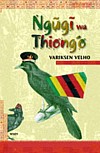
    Category 6, An SF book written by a non-anglo, non-nordic author: Ngugi wa Thiong'o: Variksen velho (Wizard of the Crow)

    VariksenvelhoThis could also habe been slotted in Tähtifantasia-winner and magical realism categories. It is a magical realist satire about an imaginary African nation lead by a corrupt leader, his coterie and the revolutionaries who want to over throw him. And it is a fun, well written and heart-felt novel. One of those situations where you rather laugh at the absurdities because crying would be too devastating.

    It is also very universal. The other novels it reminds me are those of Asturias and Fuentes and Bulgagov's Master and Margarita, even the film Death of Stalin. The corruption of power and the disintegration of society and its morals under dictatorship are same everywhere.

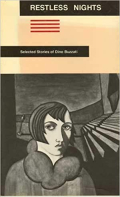
    Category 30, Magical realist book: Dino Buzzati: Restless Nights

    I could have swapped categories with these. Dino Buzzati was a journalist for Corriere della Sera and a magical realist writer, most famous for his novel the Tartar Steppe, which is one of Jukka's favourite novels. So I thought I should try some his work also. 

    Restless Nights is a collection of Restless nightsBuzzatis short stories translated in English. They are very short, pithy, sometimes without a solid ending. Sometimes they are surreal, sometimes they are extended jokes, sometimes they are more conventionally magical realist. And pretty fantastic. My favourite is propably "The Saucer Has Landed", where a Catholic priest takes a shotgun to aliens because they are God's children without original sin. Because of course God must love humanity more than a people who followed his commandments. I loved how they were short enough to read just one in few minutes and take a break. I would love to be able to read them in the original italian.

    Numi organic Moroccan mint 

    In addition to seeing haggling as performance art, one of my favourite memories of my trip to Luxor years ago was the mint tea all the traders offered to customers. it was deliciously minty and somehow very refreshing though it was often served hot in brutally hot climate. Numi's organic mint tea has lovely minty flavour, and though it is not as strong or sweet as original Mahgreb tea which has quite a lot of sugar in it,and it is a bagged tea, I find it a nice and refreshing drink. It is also an excellent base for iced tea in the summer.


  • Advent calendar 2018 – 5.12.

    Posted by Sari

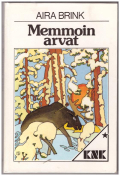
    Category 5, A Finnish SF Book: Aira Brink: Memmoin Arvat

    MemmoinarvatI read very little in Finnish as I have problems with the mode of Finnish story telling (every day life is in the centre even with SF-novels), and because I find the difference between written and spoken register to be so huge, that I very rarely find dialogue that works for me. That made this one of the tougher catetories in the challenge.

    One of my favourite books as a child – and even now – is Aira Brink's Velhojuuri, and I her other historical fantasy, Memmoin arvat, has been on the book shelf far too long. Memmoin arvat is a story of Bishop Thomas' crusade to Neva river in the 13th-century, the struggle between christianity and old local religion in Finland. It even recounts the famous story of Finland's patron saint Bishop Henrik and Lalli.

    The structure with its stories within stories was a bit challenging, and I am not a fan of using present tense in narratives so reading was heavy going sometimes. It also felt more like a history lesson with dash of magical realism than a full blown novel. The most intriguing character, Bishop Thomas, was left as a bit of a mystery, the changes in the POV did not really work, and the plot was sort of left hanging. There was a great story somewhere in the book but it really did not get out.

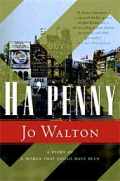
    Category 29, Alternate history book: Jo Walton: Ha'Penny

    Ha'Penny is second of Walton's Small Change trilogy. In her alternative history world Britain madea nixonian "a peace with Hapenny-smallhonor"  with Third Reich in 1940 when America did not step up to help, and is slowly sliding towards fascism. In Ha'Penny our old friend Scotland Yard inspector Charmichael investigates a bombing. In alternative chapters Violet Lark, an actress and a character whose family is clearly modelled on Mitfords, describes how she got involved with a consipiracy.

    Jo Walton is one of my favourites, both as an author as a critic, but I have been reading the small change trilogy quite slowly. The reason is that it is very good at what it does, and it depresses me. Mixing together golden age detective story – think Ngaio Marsh or Margery Allingham a bit more than Christie – with very believable alternate history. People are gettig in the mindset on informing on their friends and family, minorities are finding life harder and harder, and the elite is looking after itself. Charmichael, trapped by the system and the knowledge his superiors have on him is trying to do the right thing but is finding harder and harder. 

    Nordqvist Nippon Green

    This is a bagged sencha with strawberry, lemon and vanilla aromas. The strawberry and, in the after taste, lemon are the main flavours. It is quite mild so letting it brew for full two minutes from the recomended 1-2 is a good idea. The recommended water temperature is 75-80 degrees. It is an all right, inoffensive aromatised tea.


  • Advent Calendar 2018 – 4.12.

    Posted by Sari

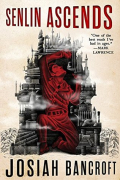
    Category 4, A steampunk book: Josiah Bancroft: Senlin Ascends

    SENLINSenlin Ascends is one of the increasing number of books that are self-published first and only then find a mainstream publisher later. It takes place in a secondary world that is reminicent of steampunky 19th-century with dirigibles and pith helmets. Thomas Senlin, a rural teacher who has just married his ex-student Marya takes her to a honeymoon to the famed Tower of Babel. They get separated, and Senlin has to ascend the great tower, level by level in his quest to find his bride.

    Senlin is a bit like Eliot's Casaubon, but one that is able and willing to learn, and he must learn if he is to succeed in his quest. The tower is crumbling – those outside have to dodge huge pieces of masonry falling randomly on the ground – and the levels are strange and surreal and not at all what the guidebook promised. This is a part of a trilogy (Books of Babel) so the book does not really have an ending, but the second one is out already and the last is out next January, so go and grab it!

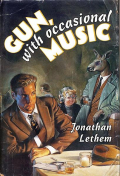
    Category 28, A Tähtivaeltaja-award winning book: Jonathan Lethem: Gun with Occasional Music

    The hard-boiled detective story in the style of Philip Marlowe and Dashiell Hammet is about a world-weary usually alcoholic private eye Gun-with-occasional-music-poster who is stupid as fuck, gets beaten up a lot and solves the mystery basically by accident. I find that boring as hell. Here the hard-boiled detective uses futuristic drugs and gets beaten up by a kangaroo. I does not help enough. It is still boring as hell.

    Forsman Black Oolong tea

    I think Oolong as an easy tea, there are so many varities from less oxidised to more oxidised that it is easy to find a favourite. I make mine gongfu-style with an yixing pot that is reserved solely to oolong teas. This involves brewing a larger quantity of tea leaves in much shorter time, and lots of mucking about with water. Bit pretentious, maybe, but I love the process. This particular tea is more oxidised oolong from Taipei, nearer the flavour of black than green tea, but has a nice refreshing flavour.


  • Advent calendar 2018 – 3.12.

    Posted by Sari

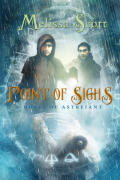
    Category 3, Horror book: Melissa Scott: Point of Sighs

    PointofsighsThis is bit of cheat. I don't like horror and very rarely read anything that can be categorised as horror – which by the way I think as a mode, not a genre. The closest I could come up with was Melissa Scott's latest Astreiant novel Point of Sighs. Astrology, ghosts and other supernatural things are a norm in Astreiant, and in this fifth outing of Nicholas Rathe and Philip Eslingen investigating things, the culprit is supernatural and the climactic scene is quite horrific enough for my taste.

    It is the rainy season in Astreiant, and the stars are all wrong for Philip Eslingen who is starting a new job as a captain of the City Guard. When a ship captain is murdered, tensions between different point stations and the City Guard escalate, and Philip and Nico must once again team up professionally in addition to their personal relationship. This one could also have been slotted in the lgbt+ main characters category.

    This is one of my absolute favourite series, and one I will be nominating for the Hugo for the best series for 2018. The world building is superb, the characters from supporting cast to the main characters are well-written, true and engaging, and the mysteries are well thought out and follow the logic of the world. 


    Category 27, A book which has won Tähtifantasia-award: David Mitchell: Luukellot (Bone Clocks)

    David Mitchell is one of my favourite novelists, I have so far loved all I have read from him. Bone Clocks is no exception. He Luuellotcan be clever and sentimental (in a good way) at the same time, he has a real talent for voices, and his avalanche of genres and tricks with structure never seem to me to go over (others may disagree).

    Bone Clocks starts like Black Swan Green (the name always reminds me of spondees in Keats' Belle Dame Sans Merci), a realist bildnungsroman set in 1980s, changes with its narrators into drug-filled hollinghurstian depiction of the 1990s, then to continent-hopping vision of 2000s literary festival cirquit, into a secret history where forces of light and dark fight epic battle and finally into a postapocalyptic dystopia. All these changes of narrators and genre are done with great skill and subtle hints in the previous parts. Pure genius.


    Green Tea With Lemon

    I have no idea which firm has manufactured this one – I think it might be Twinings, but they do not seem to have loose leaf green tea with lemon available for purchase. The leaves were quite big, so not the highest quality, but there were bits of lemon/lemon peal in the tea, so it was not just aromitized. I heated the water to 85 degrees and brewed it for two minutes. The result was nicely citrus-flavoured, not at all bitter but quite strong green tea. Good enough that now I am annoyed I have just decanted the tea into an air-tight box and forgotten to save the label.

  • Advent calendar 2018 – 2.12.

    Posted by Sari


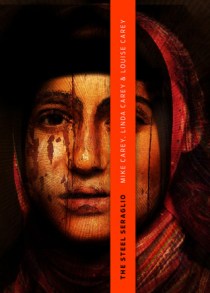
    Category 2, A Fantasy Book: Linda, Louise and Mike Carey: The Steel Seraglio (Also known as City of Silk and Steel)

    Steel seraglioWe actually have both editions of this novel, Jukka was so impressed with Nimit Malavia's art in the North American Version he bought it too, and that is the version I read. I might not have if Linda and Mike had not been guests at Swecon in Stockholm. They were excellent and versatile guests and this was a very good novel, one of the best collaborative ones I have ever red.

    The Steel Seraglio tells of a group of sultan's concubines who have to flee their city after a religious fanatic takes over. It is written in many voices, which blend impeccably together, has a host of interesting protagonists and the tale it tells is captivating. The Careys have written another novel with similar technique, The House of War and Witness, situated in 18th-century Holy Roman Empire, and it has defenitely moved up on my ever-expanding reading-list.


    Category 26, a book of SF Poetry: Hal Duncan: Songs for the Devil and Death

     I don't know if there has been an increase of SF-poetry, or if we are getting a bit more Songsofdevil out of the ghetto and realising that lots of poetry with SF-elements is published outside genre publishers. Be that as it may, it is a good thing. My favourite SF poet is Sofia Samatar, but her poetry is not collected anywhere, so as a book of SF poetry I picked Hal Duncan's collection. It is very Al: complex vocabulary and imagery and juxtaposition of sublime and crass, divine and carnal. Sometimes it works well, especially in sonnets where the last rhyming couplet often turns the poem into a new shape, sometimes it can be heavy going, and unpicking the imagery needs googling. But anyone with Al's talent who can shape his raw emotional vision of world into verse is always worth reading.


    Nordqvist Chamraj TGFOP organic black tea

    This is my go-to tea when I just want a good cup of decent black tea. Chamraj is indian black tea from the Nilgiri mountains, and the TGFOP-marking means it is of high quality. It does goes bitter easily if you brew it too long (92-95 degrees and 3 minutes are the instructions), but it makes an excellent morning cuppa.

  • Advent calendar 2018 – 1.12

    Posted by Sari

    Elisa at Lonkeropiirakka issued an SF reading challenge which I noticed, thought it would be fun and promply forgot. When I was reminded of it, I noticed quite a number of books I had already read could be easily slotted to the challenge, so I decided to have a go and finish it this year. Thus my advent calendar this year will be reviews of the books I read for the challenge. 42 books and 24 days means two books most days, some days just one (or maybe an extra book!) 

    I am also adding tasting notes on tea varieties I have been lately drinking, they vary from Longjing and Darjeeling Muscatel to artifically flavoured teas and infusions which are not tea at all. My palate is also not very discerning so don't take these as especially expert opinions,. But let us begin.


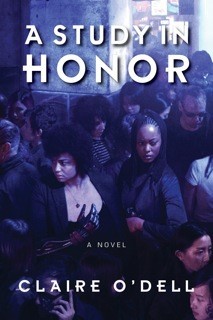
    OdellCategory 1, Science fiction book: Claire O'Dell: A Study in Honor.This novel could also have fitted into other slots on the list, mainly the "lgbt+ protagonist", "SF book with female protagonist" or "science fiction novel written by a woman" spots. But as those categories had plenty candidates, I decided to slot this one into the one of the easy basic cagegories. Claire O'Dell is a pseudonym of Beth Bernobich who has previously written fantasy. Here, as the name of the novel  suggests she has taken Study in Scarlet and Holmes and Watson out for a modern spin.

    "I object to rows because my nerves are shaken, and I get up at all sorts of ungodly hours, and I am extremely lazy. I have another set of vices when I’m well, but those are the principal ones at present.” (A Study in Scarlet)

    This is pretty much as far a the original Dr. Watson goes in describing his PTSD, he gets over it pretty quick having fun with Sherlock on his adventures. O'Dell takes this, the basic setting of mysterious investigator and discharged army doctor sharing digs and really runs with it. To a brilliant effect. In A Study in Honor, USA is in the throws of a second civil war – a progressive latina president has turned out to be too much for MAGA-crowd and they have started a war. Dr. Janet Watson is invalided  out of the army after she is shot in the arm during an evacuation, and the veteran's administration is reluctant to finance her a better artificial arm that would allow her to return to her work as a surgeon. She meets Sara Holmes who is apparently some kind of government investigator with all sorts of high-tech toys, and who offers to share her digs with Janet. Pretty soon both are involved in an investigation about a potential military cover-up.

    There was lots to love: the main characters are great. Janet is believable, tough and suffering. Sara is brilliant, mercurial, and really annoying. The near future is chillingly plausible, the bureaucracy of veteran administration spot on, and though the plotting could maybe have been a bit more coherent, the mystery works well. Thanks to Jukka who once again came home with a novel saying "I think you might like this". I did.


    Category 25, A Swedish SF Book: Karen Tidbeck: Amatka

    Some of you know that I have a somewhat strict opinion of short stories. Only two people have ever written short stories Amatka worth a damn: Anton Chekov and Karin Tidbeck. So obviously I have been interested in what kind of novel Tidbeck has managed to produce. And it is intriguing. And layered. And so very Nordic. I should not have liked this as the story meticulously depicts the every day life of collectivist colonists surviving in a sparse alien place, where words shape environment. There is love and there is mystery, and there is tragedy, but it all unveils through such matter-of-fact nordic way  that it should not be my thing. But the cadences of language, touches of surrealism and the understated but real characters made this a real winner. 


    Nordquist, Viisasten tee

    This is a black tea flavoured with strawberry, lemon and pomegranate aromas and has bits of heather bell and pineapple mixed in. The instructions call for hot water brought up to 95-100 degrees, and brewing time of 1-2 minutes. It is one of the older and more popular flavours in Nordquist's wide selection. I found the flavour a bit soapy, and the fruity notes were mainly strawberry and pomegranate. Perfectly fine if you want something sweeter, but not a favourite.

  • Steven Johnson: The Ghost Map. The Story of London’s Most Terrifying Epidemic – and How it Changed Science and the Modern Wrold

    Posted by Sari

    Yksi viktoriaanisen Lontoon kiinnostavimmista historiallisista tarinoista kertoo Sir Joseph Bazalgettesta, kaupungininsinööristä, joka suunnitteli ja rakensi Lontoon viemäriverkon. Käykää vaikka Youtubessa etsimässä videoita! Ja seuraavan kerran kun olette Lontoossa ja jos päivät natsaa, varatkaa päivä aikaa retkelle Crossnessin pumppuasemalle missä yksityinen yhdistys restauroi Bazalgetten ornamentaalisia höyrypumppuja jotka nostivat jäteveden viemäreistä maan tasolle josta se voitiin laskea Thames-jokeen.

    Bazalgetten viemärit olivat tulosta vuosien kansanterveyskampanjasta, jolla pyrittiin hallitsemaan rajattomasti kasvavassa miljoonakaupungissa esiintyviä tarttuvia tauteja, erityisesti koleraa. Pitkään niin lääkärit kuin viranomaisetkin uskoivat koleran leviävän hengitysilmassa, pahanhajuista miasmaa hengittävät köyhät asuinalueillaan olivat ennen kaikkea vaarassa.  Siksipä viemärihanke sai tuulta siipiensä alle vasta kun kuumana kesänä 1858 koko Lontoo löyhkäsi niin että parlamenttikin harkitsi siirtoa Oxfordiin.

    Bazalgetten ja hänen viemäriensä lisäksi koleran voittamisessa keskeinen hahmo oli anestesiologi John Snow joka onnistui saamaan paikalliset kaupunginisät uskomaan siihen, että Sohon vuoden 1854 tuhoisan koleraepidemian lähde oli Broad Streetin pumpun saastunut vesi, ei suinkaan pahanhajuinen ilma. Anestesiologina hän ymmärsi kaasujen käyttäytymisestä enemmän kuin moni muu. Kesti vielä pitkään ennen kuin hänen teoriansa koleran leviämisestä vedessä – käytännössä sairastuneiden ihmisten ulosteiden saastuttamassa juomavedessä – hyväksyttiin laajemmin. Lisäksi Snown toinen tutkimus, missä hän kartoitti Etelä-Lontoon vesiyhtiöiden asiakkaiden yhteyttä sairastumisiin on selkeästi kattavampi. Se oli ehkä kuitenkin liian abstrakti saadakseen viranomaisten tuen taakseen,  eikä siihen liittynyt yhtä iskevää visuaalista apuvälinettä kuin Broad Streetin epidemiasta kertovaan tutkimukseen.

    Snown paras argumentti Sohon epidemian lähteestä oli hänen piirtämänsä  kartta joka on tuttu kaikille niin kartoista, maantieteestä, kaupunkitieteestä kuin epidemologiasta kiinnostuneille. Siihen hän oli merkinnyt talojen kohdalle jokaisen koleran uhrin, vesipumppujen paikat ja vielä katkoviivalla alueen josta katujen kulun vuoksi helpompaa tai yhtä helppoa hakea vettä Broad Streetin hyvämaineisesta pumpusta kuin linnuntietä lähemmästä. Puolelleen hän sai karttansa avulla isuostuteltua itsekin epidemiaa tutkineen paikallisen kappalaisen, Henry Whiteheadin, jonka paikallistuntemus auttoi Snowta jäljittämään ja haastattelemaan paikallisia, erityisesti epidemiaa paenneita asukkaita.

    John Snown ja Sohon koleraepidemian tarina on kerrottu usein, mutta tuskin koskaan yhtä vetävästi kuin Steven Johnsonin Ghost Map -teoksessa. Moni- ja poikkitieteellisesti maailmaa teoksissaan kuvaava journalisti ja tietokirjailija lähestyy epidemiaa monista eri näkökulmista analyyttisesti ja tarinallisesti, ja vetää viimeisessä luvussa vielä lankoja maapallon yhä kaupungistuvaan tulevaisuuteenkin. Kaupungistuminen mahdollisti epidemiat aivan toisessa mittakaavassa kuin maaseudulla, mutta kaupungistuminen myös toi yhteen erilaisia ihmisiä -kuten John Snown ja Henry Whiteheadin. Heidän eri näkökulmansa ja vahvuutensa yhdessä löysivät myös ratkaisun epidemian mysteeriin.

    Kolera on 2000-luvulla pitkälti voitettu tauti, viimeisin suurempi epidemia tapahtui Haitilla 2010 maanjäristyksen jälkimainingeissa. Dramaattiselta ironialta ei parhaan hoitokeinon suhteen voi välttyä, se ei suinkaan ole taudin bakteeriperäisestä luonteesta huolimatta antibiootit, vaan yksinkertaisesti nesteytys.


  • Why Åcon is the best con (for me)

    Posted by Sari

    Fan organised SF cons – I am especially talking about those that have a literary focus – are odd things in the modern world. They started as something from the fans (or fen, as the silly insider jargon would have it) to the fans: lets get together, maybe invite a guest and talk about the thing we love, SF. Generations of authors grew up in the fan culture, they were part of it before they became “filthy pros”, and though there were always tension between the two as the old nickname suggests, all were part of the same community. At least ideally.

    But things have changed. Firstly, commercial cons are now way bigger than any fan-run convention, and that influences audience expectations. When we were selling memberships to Worldcon75 explaining that a membership was conceptually different from a ticket was a hurdle, and I don’t think all our members really got or maybe more importantly, cared about that distinction. This was an event and they were there as audience instead of participants.

    On the other hand, publishing industry has changed radically in the past decades. Even authors who are signed with a major publisher are expected to promote their work in a way that was unheard of earlier and getting a contract for your next novel is far from certain. Authors publishing with small presses or self-publishing have to fight even harder for exposure to reading publics.  It is less and less possible for authors to attend cons on their own dime and just enjoy talking about stuff they like, they have to think about them as marketing opportunities.

    So instead of people who just love SF and want to discuss and listen to panels about their favourite literature, we have audiences who want to see their favourite author on stage or find new stuff to read, and authors who want or need exposure. I am sure that to a certain extent this has always been the case, and I admit my view is influenced by the fact that I grew up in a con culture where there were very few authors present at cons, but at least to me, the division has become sharper in recent years. It is nobody’s fault, it is what it is.

    And thus we get to my point. It took only four paragraphs. I actively dislike prioritising authors over readers in conversations about literature. I don’t necessarily want to see or hear my favourite authors at a con. I have met many by now, almost all of them wonderful, clever and passionate people, and I am more than happy to listen to them if they have interesting things to say about SF – as readers. But I know many more wonderful, clever and passionate fans, readers and researchers who have interesting things to say about SF, and their perspective as readers is to me on average more interesting. I also want to feel I am a part of the conversation, not just the audience, not just a potential book-buyer, not just a ticket-buyer.

    And that is why Åcon is the best con. It is small enough to generate that feeling of community, there are only few authors around and apart from guest of honour their status as an author does not mean they are prioritised in the programme. It is relaxed enough that conversations that were begun at a panel actually can be continued at the bar or over ice cream. It is about Us. And SF. And that is the good stuff.