Eating Muffins

Halme Polvinen Family Collective. You will all be assillymated

  • Advent Calendar Dec. 5. 2020: Kalank (2019)

    Posted by Sari

    Kalank kuvaAbhishek Varman’s Kalank was conceived as luscious big-budget melodrama. Every shot is fantasy-gorgeous, all the costumes are color-coded, and the love stories are sad and big. The genre is historical – this is a partition drama. In 1945, in what is now Pakistan Satya (Sonakhsi Sinha) is dying of cancer. She goes to meet her friend Roop (Alia Bhatt) to persuade her to move in to “comfort” her husband. Roop agrees, if Satya’s husband Dev (Adtitya Roy Kapoor) will marry her. As Dev is in love with Satya this is a marriage in name only. Roop is sad and has nothing to do, so she begins take dancing lessons from Baahar Begum (Madhuri Dixit), and work in her husband’s newspaper. Then he meets his father-in-law’s illegitimate son Zafar (Varun Dhawan) who wants to seduce her to get revenge on his dad. And things do not go well, especially as Baahar Begum and Zafar are muslim, and Dev’s family hindu.

    The story is muddled and though the roles would give possibilities to greater probing of the loyalties divided by partition, this has been written as a personal melodrama. Partition is just a backdrop which makes it seem like a lost opportunity. The best thing is to see Madhuri Dixit again, though her role and relationship with Bhatt is basically straight from Devdas. Dhawan spends most of the film without a shirt forging swords and battling CGI bulls, and Bhatt, the investigative reporter, walks around the red-light district without any problems. So it is also a fantasy movie. It could have been much better, but it is pretty enough you can sort of forget it makes very little sense.

     The strangest thing was a beautiful shot of Zafar sitting on the banks of ariver (Ravi?) at the sunset, smoking. And a small text appearing at the right bottom corner saying “smoking kills”.

    English Teashop Happy Holiday: Green tea with Cinnamon, Pomegranate, Ginger, Cardamon, Cloves, Nutmeg and Pepper. Lots of Christmassy flavours. Like almost all flavored teas, this smells better than it tastes. Very meh.

  • Advent Calendar Dec 4.2020: Bodyguard

    Posted by Sari

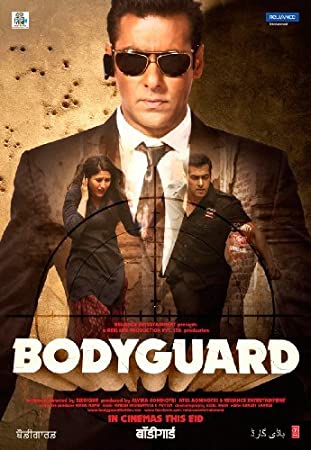
    Bodyguard kuva2This was the highest grossing Indian film of 2011, and is a remake of director Siddique’s  Malayalam film. Salman Khan plays a superhero-like bodyguard named Lovely Singh, who is hired to protect his benefactor's daughter, Divya (Kareena Kapoor).  Kareena tries to distract officious Salman by phoning him and pretending to be a girl in love with him. Salman does not find out who is calling him, not even when Kareena finds herself really falling in love with Salman. In the seminal scene Salman meets Kareena's best friend on the train station and thinks she is the girl who is in love him. In the last third of the film Salman and Kareena reconnect after years, when the best friend has died of cancer and left Salman a widow.

    This seems like a throwback to 90s or early noughts. There is a love triangle and two distinct halves of the story. The humour is so, so broad – the Johnny Lever role played by Rajat Rawail – and the violence is both cartooney and graphic.  Also, Salman Khan dances with his biceps. I am not kidding. The best joke is a T-shirt Rawail is waring which says: “I am in shape. Round is a shape.” This was not really my cup of tea, especially as I have never understood the popularity of Salman Khan, and this is really a vehicle for him. I also miss the pagal Kareeena, Divya is pretty one note. There are at least three of four remakes of the original for the different Indian markets. If this was any better, it would have been interesting to see the different versions.

    English Teashop: Super Star Anise Tea. I got bored with Clipper's infusion. This at least has black tea in it, and English Teashop advent calendar  comes in pyramid bags. I quite liked this one, I can taste both black tea and anise, but the anise does not overpower.


  • Advent Calendar Dec 3. 2020: Dhoom 3

    Posted by Sari

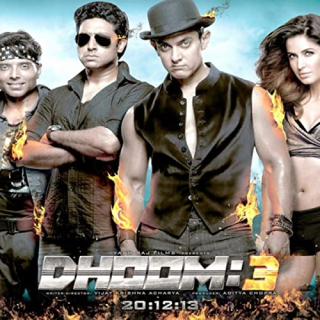
    Dhoom 3 kuvaDhoom is the second largest franchise in Indian cinema. All films feature Abhishek Bachchan and Uday Chopra as cops investigating complicated thefts, and all of them feature big name antagonists (John Abraham, Hritrik Roshan, Aishwariya Rai Bachchan, Aamir Khan). In this third instalment Aamir Khan has suffered a trauma as a kid – his father committed suicide when a bank foreclosed on his Indian circus in Chicago. As an adult he restarts his father’s circus and takes revenge on the bank by robbing its branches. Abhishek and Uday are called in to investigate.

    There is, of course, a twist, but it is predictable as this movie has clearly taken elements from Prestige. Even so, it is an entertaining thriller with lush musical numbers and typically Bollywood unreal slow motion stunts.  The female lead, Katrina Kaif does sexy athleticism well but does not have that much to do, as this is really a cat and mouse game between Abhishek and Aamir.

    Dhoom franchise’s most recognisable element is the song Dhoom Machale which in this instalment is a tap-dance, which is performed nicely against the genre as something rather heavy and jarring. It is difficult to believe Aamir is pushing fifty in this one, he can’t beat Hritrik’s dancing in the second instalment, but his intensity works well both in the song and in the whole film.

    Clipper Rise & Shine infusion has Yerba Mate, Lemongrass, Lemon Verbena in it, so caffeine and citrus makes it a morning “tea”, not really evening. The citrus elements come through nicely, but not my cup of tea, so to speak.

  • Advent Calendar Dec. 2. 2020: Tanu Weds Manu, 2011

    Posted by Sari

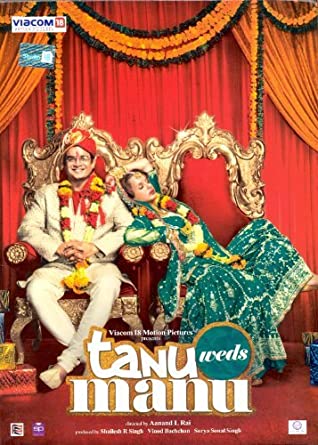
    Tanu Weds Manu picManu, an NRI doctor from London comes back to India to meet girls his family have selected as potential mates. He falls for the first girl, Tanu, but the college-educated girl tells Manu he already has a boyfriend and does not want to get married. Manu bows out from the arrangement without blowing Tanu’s secret affair but meets her later in a wedding in Punjab and things get complicated.

    From at least Hum Aapke Hain Kaun (1994) onwards romantic comedy and drama were the blockbuster genres of hindi cinema. Nowdays top of the charts have much more varied movies, and even the romantic comedies have more range than before. Tanu Weds Manu does not have much of a plot, and it has familiar tropes from Punjabi wedding to a race to a train station a la Dilwale Dulhania. But Tanu Weds Manu feels less candyflossy than older romcoms. Manu is more sensitive modern protagonist than many, Tanu’s rebellion against tradition and her parents’ wishes seems very understandable, and the young people have their own contemporary lives apart from the glittery traditions.  Even the obligatory wedding feast song looks more like ordinary people having fun than hihgly coreographed affair. The ending gets rather melodramatic – but it would not be Bollywood if it didn’t. I do have to say that it was a bit annoying that after Tanu had created all the problems surrounding her marriage, it was her parents, Manu, and his parents that had to try to straighten everything up, she could just hide in her room. Because arranged marriages.

    Clipper Wild Berry. Again, a berry infusion, not a tea. And surprisingly tart. It reminds me of Karkade which is not surprising because one of the ingredients is hibiscus. There are hints of liquorice and maybe rose hip, but I really can't taste pineapple, nettles, or billberry. Also a bit misleading name as so many ingredients are not berries.

  • Advent Calendar Dec. 1. 2020. Baahubali 1 & 2 (2015, 2017)

    Posted by Sari

    This year, the Advent Calendar is about Bollywood: 24 short reviews of Bollywood  (or rather Indian) films I have lately watched and which have been made during the last about ten years.  Also classically, a tea/infusion calendar. I have Clipper's Advent Calendar of organic Tea which seems to have 12 flavours, and I try to find another one so I don't have to do same flavours twice. So, Let's go: 

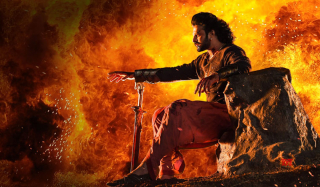
    BaahubaliBaahubali is pretty much like Avengers Infinity War and Endgame: really one movie divided into two. It is a sweeping epic set in semi-mythical kingdom of Mahishmati. It is full of family drama, superhero-like heroes, epic battles and CGI elephants. It begins with Baby Baahubali being spirited away from his palace after a coup and brought up by villagers. When he grows up, he climbs a huge-ass waterfall, finds a cool warrior-girl who is fighting a guerrilla war against the Mahishmati tyrant. Then he meets the faithful old retainer who recognises him as the son of the lawful heir and tells the story how Baahubali senior met a sorry fate. It is all about sibling rivalry, palace intrigue, honour and jealousy. This story takes at least two thirds of the movies. When the old retainer has finished his story, Baahubali junior wants revenge and they go and attack the castle. With a stratagem which took twitter in a storm.

    Baahubali-movies were the most expensive movies made in India at the time, and Baahubali 2 is the most popular Indian movie of all time. They are also interesting in that they were shot in tamili and telugu and dubbed to other Indian languages. Latest film from the same distributor was shot in tamili, telugu and hindi. Instead of local cinema remade in hindi as has been the habit for years, it seems there is capital enough for big films in other language areas, and just dubbing or shooting them in multiple languages gives them exposure in all Indian markets.

    Baahubali films are somewhat different from modern hindi cinema even historical dramas of, for example, Sanjay Leela Bhansali. They are even more melodramatic, gaudy, long and full of slow motion and bullet time stunts. Three years and probably a bigger budget have made difference in the quality of the movies, the later one is sharper and has better CGI. I also liked that all three women: Baahubali’s mother, his fiancé and his father’s aunt-mother were all pretty kick-ass characters. But as a whole it was just too long and just so grand with its emotions and plot that it went just too big for me to really work.

    Here is Baahubali senior being both heroic warrior and a good son


    Happy mondeaysClipper Happy Mondays. This is a ginger and lemon infusion which has also black pepper and lemon grass. It is a bit bland but that might be because I don't have the patience to let tea bags infuse the 3-5 minutes instructions dictate. It does have an interesting peppery after taste, though. I am still making my mind up if I like it or not.

  • NT Home: Midsummer Night’s Dream, Bridge Theatre

    Posted by Sari

    At the appropriate time of year, we get NT Home production of Midsummer Night’s Dream from the Bridge theatre directed by – who else – Nicholas Hytner. And it is brilliant.

    Midsummer Night’s Dream is a play that easily bears multiple interpretations from erotic fairy-tale to light family comedy. It can be seen as the comedy obverse of Romeo and Juliet or it can stress the more serious themes of (toxic) patriarchy and infidelity. And I think its malleability proves that the text is much more than just a delightful romp through the woods.

    Hytner’s production has not apparently been everybody’s cup of tea. For one, It is very immersive and fourth-wall breaking. The action takes place on raised and lowered platforms with groundlings standing all around and herded by the movement stewards to appropriate positions when the actors and platforms move, so audience is very much part of the production. Even more, there is interaction between audience and the performers: Puck and Bottom address the audience, Puck crowd surfs, and in the most famous scene, the rude mechanicals borrow a cell phone from audience member to check the stages of the moon.

    There is also quite a lot of ad-libbing, short answering phrases or jokes slipped in between the Shakespearean dialogue. I think it works well, but I can see why that would jolt some people.

    Most importantly the play – as so many productions now days – plays with the gender roles. For modern (feminist) audiences, Dream’s text can be pretty rough: Egeus and Theseus want to force Hermia to marry Demetrius on the pain of death, Hippolyta is literally Theseus prisoner, Oberon wants to take Titania’s page, and then plays a trick on her by making her fall in love with Bottom as an Ass.

    Here Hytner first makes Athens a repressive religious patriarchy, and then queers the play to eleven by switching the dialogue between Oberon and Titania in the forest scenes. It works brilliantly. As Hytner follows Brook and most post-Brook productions in doubling the roles of Theseus and Oberon and Hippolyta and Titania, the shenanigans in the woods influence the stern Theseus and defeated Hippolyta of the first scene, and by the end, they, through Oberon and Titania, have found new sides to themselves. Similarly, as Hippolyta, Gwendolyn Christie can’t offer Hermia anything else but sympathy from her glass-case prison. As Titania she can help both pairs of lovers and teach Oberon a lesson.

    All the actors do a good job. David Morst is an obvious standout as very punk Puck and is great both in delivery and the physicality he brings to the role (The fairies spend most their time on circus slings doing acrobatics – a homage to Brook and his trapezes, maybe) But my favorites are firstly Oliver Chris’s Theseus/Oberon, he is outstanding both as an unyielding Theseus and love-sick fairy-king, and the way he sort of blends together both his roles in the playacting scene is great. Secondly, Jamie-Rose Monk as Snug the Joiner. She had great comic timing and her freestyle wrestling lion was hilarious. She also delivers a great song for Oberon and Bottom.

    This would have been a great production to see live, especially as a groundling, but even the cinecast was a delight.

  • NT-home: Coriolanus

    Posted by Sari

    Thanks to Covid-19, National Theatre has kindly been putting up its NT-live performances on YouTube once a week and keeping them up for a week. As they have not so far released any of NT-live plays on DVD, this is a great opportunity to catch those you might have missed.  In 2013 NT live broadcasted Josie Rourke’s Coriolanus, one of Shakespeare’s last plays and his last Roman play. It proved immensely popular – a fact that baffled many of the reviewers who apparently had been living under a rock and did not know how popular Tom Hiddleston is.

    Donmar is an interesting space: it hosts a little over 200 viewers and the stage is surrounded by audience on three sides. Not a space you first think of when you think of a play were both battle scenes and crowd scenes are sort of central. It is impossible to know how well the production worked at the theatre, but the direction of the telecast was thoughtful and did manage to capture something of Donmar’s intimacy.

    Shakespeare’s Roman plays are the category of plays I am least familiar, and I admit going to my bookshelf and digging up Alexander Leggatt’s “Shakespeare’s Political Drama” to ground myself. For the Roman plays are intensely political plays and Coriolanus is no exception. It tells the tale of C/Gaius Martius Coriolanus, a roman general who early in the republican period defeats Rome’s enemies. He is hailed as a hero and a saviour and is expected to take his place among the roman political elite. But has quite intense contempt towards the plebs, and thus his political career is shot down both by his inability to curry votes to be elected a Consul, and by the machinations of the people’s tribunes who exploit his actions. He is banished after speaking against the republic, and then decides to go serve his sworn enemy Aufidius whom he defeated earlier. When Aufidius and Coriolanus are about to conquer Rome, the senate sends his wife and mother to plead for the city. He relents and then is killed Aufidius who sees this, reasonably enough, as a betrayal.

    Coriolanus is a difficult play mainly because the title character is so unlikeable. His virtue is military virtue, he is cut off from humanity, from body politic: he is the sword of Rome, not its sword arm. His self-sufficiency and his contempt for the political system of his city is tempered only by his love and subservience to his mother Volumnia, who as a proper Roman matron, has distilled his son with martial virtues. And the text does not give any room for his interior life, there are no monologues to let us understand him better. Thus the audience is left with a character with unlikeable opinions, too much honesty and too  little empathy.

    A good contrast is Henry V, a play Coriolanus is often compared with. Henry outside of Harfleur and before Agincourt rallies his men to battle by inspiring them, by effacing the class distinctions between them. Coriolanus instead of mocks and try to force his men to attack, and when that does not work, he goes at it alone. And there is no equivalent of “upon the king” -monologue. Henry knows King is a role he plays for the good of his kingdom (and himself), Coriolanus petulantly refuses to play anything.

    Coriolanus is also a very embodied play, the metaphors of body politic dominate the discussion on roman society, Coriolanus wounded body is itself a bargaining chip in the election, and the bloody nature of war on bodies is front and centre. In this production’s final scene Aufidius follows Coriolanus taunt/command “Cut me to pieces” by stringing him up like a pig and slicing him up. His blood drips on Aufidius as the latter speaks the last words. In the more priavate sphere, the male bonding between Aufidius and Coriolanus is textually tinged with homoeroticism, and even Coriolanus’ Mother sort of wishes of being his wife instead of his mother.

    Rourke’s production does manage to hold attention with pretty symbolic sets, fourth wall breaking stage direction and especially with excellent acting. Hiddleston is better Coriolanus than he was Hal in Hollow Crown where I thought his performance worked in the large public scenes but was little lacklustre when he was depicting Hal/Henry’s interior life. Maybe that is the reason his style works well for Coriolanus who has problems with the idea of a public and private self. Hiddleston’s diction is clear, he has no problems with play’s physicality, and even manages to make the fanservice shower scene integrate with the play. On the quieter scenes he is equally good, and the scene with Volumnia at the end is excellent. In other roles, Mark Gatiss as Menenius does good job as the jolly patrician currying the favour of the citizens and I especially and bit surprisingly liked Birgitte Hjort Sørensen as Coriolanus’ wife Virgilia, who in the play is pretty much side-lined by the relationship between Volumnia and Coriolanus.

    Coriolanus is one of Shakespeare’s longest plays, and even with pretty radical cuts this performance takes over three hours. If a cinecast can hold your attention so long with no problem, it is undoubtably a success. And Donmar’s Coriolanus does that.

  • Karpin maailma

    Kirjoittanut jukkahoo

    Sain tässä katsottua suomalaisen poliisisarjan, Karpin, viimeisen jakson. En ole liiemmälti kotimaisten tv-sarjojen suurkuluttaja, suhtaudun yleensä dialogiin sen verran penseästi, että katsominen jää muutamaan minuuttin tai täydelliseen välttelyyn. Karppia tuli katsottua, koska yksi sarjan molemmilla nähdyillä kausilla olennainen elementti on Helsingin kaupunki ja sen kaupungintalo. Kyse on siis lähinnä ammatillisesta kiinnostuksesta, onhan talo työpaikkani ja kohtuullisen tuttu. 

    Sanottakoon sarjan puolustukseksi se, että kyllähän se eteenpäin kulkee. Hitaasti ja sellaisella paatoksella, joka innottaisi Tulenkantajiakin, mutta kuitenkin. Näyttelijätyö on kelvollista, jos kohta se dialogin perkele tekee hyvästäkin näyttelijästä kankean ahdistujan. Ns. rennommalla otteella asiat ottavat ammattilaiset, kuten Pertti Sveholm, hoitavat kunnialla kotiin sen mikä kannettavissa on. 

    Katselin toisen kauden seitsemän ensimmäistä jaksoa melko nopeassa tahdissa muiden hommien lomassa, mutta seitsemännen jakson jälkeen en kyennyt tarttumaan viimeiseen, kahdeksanteen jaksoon. Jostain syystä aivan jumalkoneesta vedetty helikopterin putoaminen Suomenlahteen oli ns. viimeinen silaus hassuutta ja myötähäpeää tarjonneelle jaksolle. 

    Nyt sitten kaiken koronakaamoksen keskellä kuitenkin päätin tarttua härkää sarvesta ja tarkistaa, jotta mihin homma päätyisi. No, aika lailla lujaa mentiin edelleen sinne hassuuden ja myötähäpeän puolelle, mutta onneksi tarina tarjosi jälleen muutaman kaupungintalokohtauksen, joista nauttia. Uskallan epäillä, että ne pienet yksityiskohdat, jotka ovat riemastuttaneet ja "harmittaneet" minua, eivät aukea taloa tuntemattomille. Satunnaiset kulkureitit ja tilat, joihin henkilöt päätyvät, ovat välillä hyvinkin innostavia ratkaisuja. Tai typeryydessään mahdottomia.

    Tällaiset visuaaliset linjaukset, joissa kävellään kohti portaita, mutta todellisuudessa umpinurkkaukseen, ovat ihan OK. Eipä se satunnaisella tv-katsojalle välity, mutta tilaa tuntevalle kyseessä on ihan hauska yksityiskohta. Sen sijaan en jonkun sähköposteja tallentavan laitetilan sijaitseminen jossain yleisellä käytävällä? Käsikirjoittajien toki täytyy vetää linjoja suoraksi, mutta joku roti nyt sentään. Toisaalta koko tarinan yllättävänkin yksioikoinen kuvio, ympärille paisuteltuine ihmissuhdedraamoineen ja juonitteluineen, oli sen verran rautalankaa, että ymmärtäneehän tuon. 

    Sattumoisin huomasin, että Ylen Areenasta löytyy nyt myös ranskalainen Le Bureau des Légendes (Le Bureau, vakoojaverkosto). Yhden jakson perusteella voi sanoa, että jännitysdraaman osalta, ranskalaisilla on enemmän rahaa ja selvästi parempia dialoginkirjoittajia. Saatan katsoa enemmänkin. 

  • Kirjakatsaus 2019

    Posted by Sari

    Tänä vuonna jatkoin jo pari vuotta hyvin toiminutta tavoitteiden asettamista: vähintään 52 kirjaa pitäisi saada vuoden aikana luetuksi. Lopputulos oli 61 kirjaa ja kaksi äänikirjaa. Marras- ja joulukuu olivat kovasti hiljaisia lukurintamalla – tavoite oli tullut jo täytettyä ja elämä vaikeutti kirjoihin uppoutumista. Kuuntelin Simon Schaman Citizens -kirjan Ranskan vallankumouksesta ja totesin, että faktateokset äänikirjoina eivät minulle toimi. Nukahdin illalla kesken kirjan, ja jouduin sitten etsimään, mikä oli viimeinen kohta, jonka muistin. Kirjan rakenne ja tulokulma eivät myöskään minua ihan vakuuttaneet, mutta ilman kunnollista kuvaa kokonaisuudesta ja post-it lappuja tai marginaalimerkintöjä ei kunnollisen analyysin teko onnistunut.

    Alkuvuodesta jatkoin viime vuoden Vietnam-teemaa tutustumalla pariin perusteokseen sodasta (Gary R Hess: Vietnam: explaining America's Lost War ja Mark Atwood Lawrence: Vietnam war a concise International history), molemmat toimivat ihan mainiosti tehtävässään. Yhdysvaltain sisällissodan historiasta kirjoitin jo aikaisemmin.

    Alkuvuodesta haastattelin myös Dave Hutchinsonia Tähtivaeltajapäivässä, ja luin siinä sivussa hänen Fractured Europe -sarjansa viimeisen osan Europe at Dawn. Dave osoittautui leppoisaksi tyypiksi, ja – kuten aiemmista muffinssikirjoitelmista lienee käynyt selväksi – Fractured Europe on ihan siellä top kympissä viime vuosien genreteoksista. Toinen kirjailija, jonka kanssa jaoin mikrofonin tänä vuonna oli Åconin kunniavieras, kanadalainen fantasiakirjailija Amal El-Mohtar. Mohtar julkaisi tänä vuonna yhdessä Max Gladstonen kanssa hienon pienoisromaanin This is How You Loose the Time War. Paitsi että romaani on uskomatonta mielikuvituksen tykitystä, on se tyylillisesti harkittu, spefiksi poikkeuksellisen lyyrinen kokonaisuus. Ei ihme, että teos esiintyy useammallakin vuoden parhaat -listalla.

    Tykkäsin myös John Le Carrén The Legacy of Spies romaanista, jossa aikaisemmista George Smiley -romaaneista tuttu Peter Guilliam joutuu asettamaan varhaisemmat toimensa uuteen perspektiiviin, kun nykyajan tiedustelutoimia valvovat elimet alkavat kaivaa esiin menneisyyden operaatioita.

    Vuoden vaikuttavin lukukokemus oli kuitenkin Laurie Marksin Elemental Logic sarja. Sarjan neljäs ja viimeinen osa näki vihdoin tänä vuonna päivänvalon, ja luin kolme aikaisempaa osaa uudelleen muistuttaakseni itseäni mitä sarjassa oikein tapahtui. Kaikkien näiden vuosien jälkeen Marksin tetralogia tuntuu edelleen tuoreelta ja omintakeiselta. Sen ihmissuhteet, perhekäsitys, miten valloittajien ja valloitettujen suhteet kuvataan ja miten loppuratkaisuun päädytään tuntuu edelleen ainutlaatuiselta.

    Siitä, että pääsin tavoitteeseeni, on pitkälti kiittäminen C.S. Harrisin Sebastian St. Cyr -sarjaa: luin kaikki toistaiseksi ilmestyneet kirjat tästä regency-dekkarisarjasta lähes putkeen syksyllä. Ei ehkä fiksuinta ikinä, sillä vähän alkoivat teokset puuroutua, mutta Harris on nähnyt vaivaa historiallisen miljöön luomisessa ja vaikka päähenkilöt ovat kovin tietoisia omasta etuoikeutetusta asemastaan ja kaikki pettävät aviopuolisoitaan, koukkuun jäin.

    Suomeksi luin tasan yhden teoksen, Sanna Nyqvistin Räjähdemiehen Perinnön. Nobel-instituutiota monista eri näkökulmista käsittelevä tietokirja on helppolukuinen ja informatiivinen. Pidin kovasti siitä, että Sannan kuvailun kohteena eivät olleet Nobel-voittajien teokset vaan itse instituutio ja sen asema kulttuurissamme Ruotsin akatemiasta juhlaillallisten pukuihin. Naisnobelisteja käsittelevä luku oli puhdasta timanttia.

    Tänäkään vuonna ei tullut luettua mitään, joka olisi saanut niskakarvat todella pystyyn – ellei sitten tuo aluksi mainittu Schaman teos. Muuten mentiin yllämainitsemattomien teosten kohdalla aikalailla sellaisella ihan kiva/vähän mitäänsanomaton linjalla.  Arkady Martinen Memory Called Empire oli pieni pettymys, lähinnä varmaan siksi kun sitä oli niin kovasti kehuttu. Itselle jäi siitä vähän sellainen ”meh” -fiilis. 

    Toivottavasti ensi vuonna lukuinnostus kantaa läpi koko vuoden eikä tyssää kesken. Uudet tilauksessa olevat silmälasit saattavat ehkä auttaa asiaa.

  • Jouluaatto 2019

    Kirjoittanut jukkahoo

    Burp! Kystä on kyllästänyt yllekirjoittaneen. Kaikkea on taas ahmittu niin, että kupu on tyydytetty ja kolot tilkitty. On kyllä hyvä että joulu on vain kerran vuodessa. 

    Koska ylensyömisen mahdollisuus oli tiedostettavissa, tein etukäteen nokkelan päätöksen hankkia luumuisan juoman täksi illaksi. Sherwoodin siiderit ovat sellaisia helpostijuotavia Olvin tuotteita, joten kun heiltä tällainen kirsikka-luumusiideri löytyy, niin sitäpä tuli koemaistaa.

    Ja sellaistahan se on, kirsikan maun sieltä voi tunnistaa ihan OK, luumukin tulee esille, mutta siideriksi tämä on sellainen omenamehu makuaineilla. Kuten toki odotinkin. Jos kirsikka, ja erityisesti luumu, innostaa, niin kokeileminen ei paljoa maksa. 

    Tämä saa nyt riittää, turha rutistaa enempää. Uusi vuosi ja toivon mukaan uudet kujeet odottavat, joten on mahdollista, että blogi saattaa olla vuoden 2020 aikana eläväisempi kuin vuosikausiin! Mielessä on tietynlainen säännöllisyyden tavoittelun suunnitelma, jonka tarkoituksena olisi muuttaa vakiintuneita tapoja ja rutiineita. Muokata mieltä ja miestä. 

    Joulu 2019 mid