Eating Muffins

Halme Polvinen Family Collective. You will all be assillymated

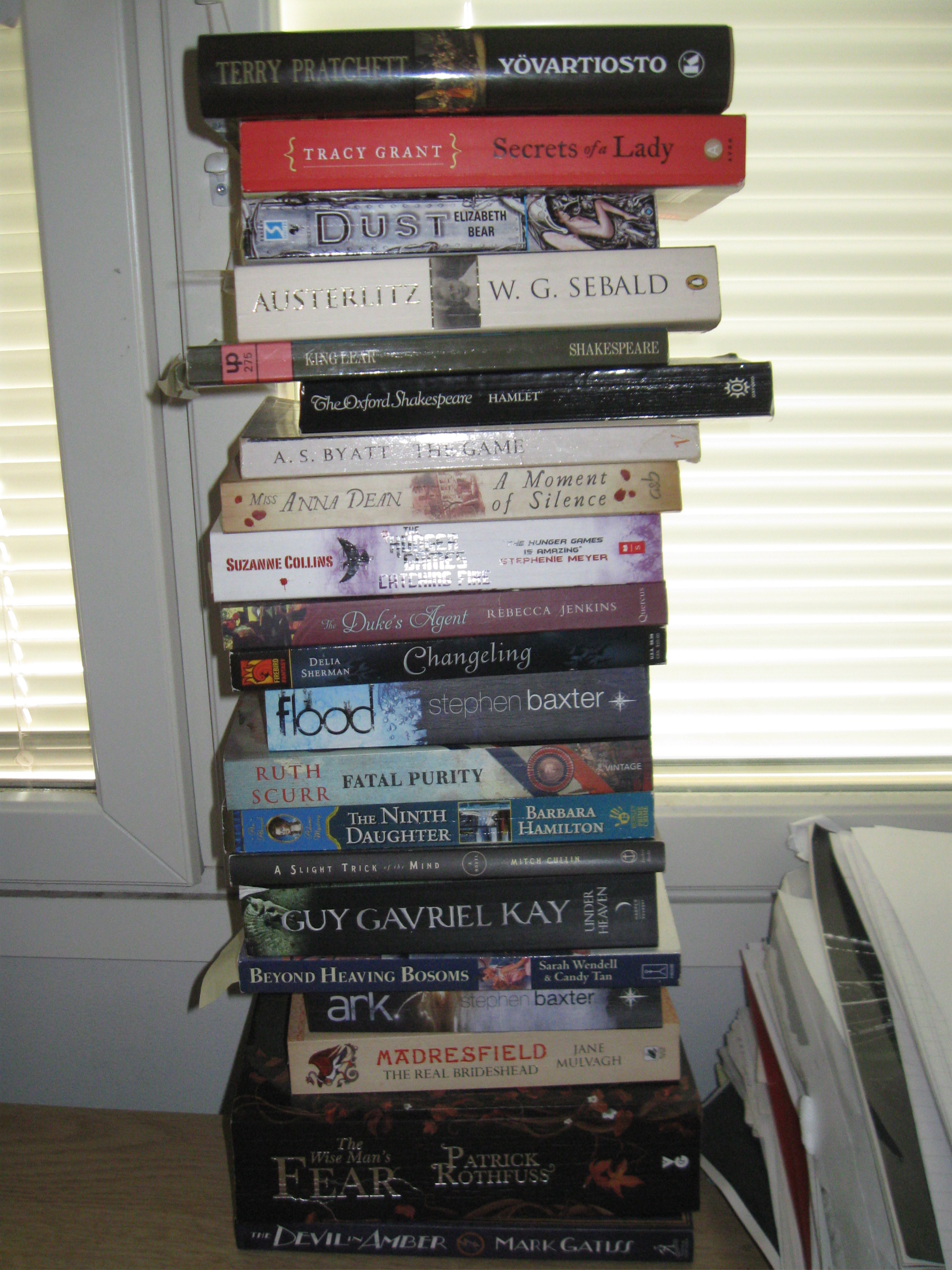
  • Sebald: Austerlitz

    by

    ,

    Posted by Sari

    Austerlitz is the last novel of W.G. Sebald, a German author and academic who lived most of his adult life in England and was killed in a traffic accident in 2001. Austerlitz knocked a book out of my list of 32, first time this happened since I drew the list up four years a go.

    Austerlitz is a strange narrative. It is a story of how its nameless narrator meets in Antwerp one Joseph Austerlitz, and keeps meeting him on and off through years. During their meetings Austerlitz and the narrator discuss about architecture, history, culture and ultimately Austerlitz's quest to find his own past.

    Sebald writes in long sentences without chapters or paragraphs. I was expecting that getting into the rhythm of the text would be a chore like it is for me with Proust or later James, but somehow Sebalds narration rolled almost hypnotically from page to page interrupted only by the blurry and enigmatic photographs. It was easy to slip into the narrative even in a bus or a restaurant, slow one's heart to beat to synch with the novel.

    As a historian, the themes of memory and history are naturally something I easily gravitate to, but in this case those were almost incidental. Though Sebald's vision is in itself revelatory, it is the way he echoes the themes of repression and memory in the structure and language of the book that leaves me almost speechless. In word and picture he talks from the beginning to the end about holocaust without really mentioning it : ”…I came on a glorious early summer's day to the city of Antwerp, known to me previously only by name. Even on my arrival, as the train rolled slowly over the viaduct with its curious pointed turrets on both sides and into the dark station concourse, I had begun to feel unwell, and this sense of indisposition persisted for the whole of my visit to Belgium on that occasion. I still remember the uncertainty of my footsteps as I walked all round the inner city, down Jeruzalemstraat, Nachtegaalstraat, Pelikaanstraat, Paradijsstraat, Immerseelstraat and many other streets and alleyways…” His metaphors, images, digressions and words criss-cross and connect through history making the past, ours and Austerlitz's into integral part of the present.

    Through fortresses, libraries and railway stations, tree-roots and burial grounds Sebald gently hammers his passionate but unsentimental meditation on 20thcentury Europe to the consciousness of his readers, reminding us of our shared history, and the need to remember. Do yourself a favour and read Austerlitz. It might change the way you look at literature.
  • Patrick Rothfuss: The Name of the Wind, The Wise Man’s Fear

    by

    Posted by Sari


    Patrick Rothfuss: Name of the Wind, Wise Man's Fear

    When I was younger I used to love big fantasy series. Thousands and thousands of pages of adventures and worldbuilding. There was no bad there. LotR was and is the defining novel of my life, and after that I read everything I got hold of from Donaldson, Modesitt and Eddings to to Feist, Tad Williams and Hobb.

    Then I sort of went off the format. I tried some really awful ones, like Brooks and Jordan, and some really well recieved ones, like Martin and Erikson, but nothing really took. Name of the Wind had been waiting on the shelves for a year or two, and I don't suppose I would have gotten around to reading it without Tähtifantasia Award. It was a 2011 nominee and as a member of the shadow-panel of the award at Finncon, I was forced to tackle the daunting tome.

    And I was pleasantly surprised. Name of the Wind, and especially the sequel, Wise Man's Fear have their share of problems but for a first time in years, I really got into the groove, and ended up ordering part two when I was only half way through part one. Kingkiller Chronicles is the story of Kvothe, whom we meet at the beginning as a humble innkeeper Kote, telling his life story to a travelling chronicler. Though Kvothe is still young, he is already a legend, who – according to the blurb on the back – has stolen princesses back from the sleeping borrow kings, burned down the town of Trebon, spent the night with Felurian and left with his sanity and life intact, has been expelled from the university at a younger age than most people are allowed in, tread paths by moonlight that others fear to speak of during the day, talked with Gods, loved women and written songs that make the minstrels weep. Busy life, one might say.

    A hypercompetent protagonists growing up and having adventures is the meat and potatoes of fat fantasy. Nothing new, exciting or different here. The hook is that Rothfuss does what he does very, very well. His worldbuilding is interesting, he unravels his plot little by little, thus making the reader wanting more, and there are a lot of hints (and hopefully also red herrings) to keep the reader engaged. As far as the protagonist goes (as my favourite character in all fiction is that king and emperor of hypercompetents, Crawford of Lymond) I have no problem with Kvothe being good at everyting at the age fo seventeen. Besides, there are ecxellent character details, like the way Kvothe handles money (he is always short of it and thus much of his life revolves around getting some), or the way it is apparent that teenagers, even hypercompetent ones, are morons at times.

    But as I said there are problems. Traditional fantasy like this is supposed to run for hundreds and hundreds of pages, but the level of detail here is daunting. Kvothe's first year at the magical university takes about three hundred pages, and Wise Man's Fear has a hundred page training montage. I know this is all about the growth and education of the hero, but come on! In the novels there are episodes of Arsenal level boredom where nothing happens. Also, is there any reasonable way to bring the story to the end in the next volume without the whole feeling unbalanced? Two thousand pages on and our protagonist is still seventeen(ish) – depending how you count the time he spent in the fearie.

    Kingkiller Chronicles are page-turners because you really, really want to know what happens next: who is Denna's mysterious patron? Who is Denna, for that matter? How does the moon figure into anything? Where did Kvothe pick up Bast? Who is this king he is supposed to kill? Or is he? And what is the real deal with the Chandrian? Lets hope it does not take Pat another four years to tell us.

  • Shades of Milk and Honey

    Posted by Sari

    Here is one I made earlier:

    Mary Robinette Kowal: Shades of Milk and Honey

    Regency – and I am using regency here as a genre, not a historical period – fantasy is getting to be a genre of its own. Pat Wrede's and Caroline Stevermer's Sorcery and Celia novels, Susannah Clarke's Mr. Norrell and Jonathan Strange, Naomi Novik's Temeraire books and last and defenitely least the rewritings of Jane Austen's novels with zombies, vampires and whatnot. And if someone has not yet done so, I am sure there is a writer working on his or her ground breaking regency paranormal romance. (He a brooding viscount and a vampiric rake, she a leavel-headed, plain and clever daughter of a country gentleman…)

    Mary Robinette Kowal's first novel, Shades of Milk and Honey is a romance novel about alternate regency where in addition to piano, painting and little french, well brought up young ladies are also supposed to know how to manipulate glamour, that is to create pleasing illusionary tableaux with sound, movement and scent to brighten up the drawing rooms. Jane and Melody are the two daughters of a not so wealthy gentleman trying negotiate a future without a sizable dowry. Jane is the plain but talented one – already on the shelf at the ancient age of 28 – and Melody the pretty one who envies Jane's talent at glamour. In the course of the novel they of course meet a number of dashing and/or brooding gentlemen, and try to find a satisfactory match for themselves.

    The whole affair seems to be a very conscious reworking of Jane Austen, mostly Sense and Sensibility, but also at least Pride and Prejudice and Emma feature prominently on the way. The characters are quite well constructed, the prose charming, and Kowal works her little piece of ivory with skill. But though the ending is more Sturm und Drang than Austen, the fact that the Austen influences and homages on the level of the characters reflect to the plot makes everything is just a tad too familiar for an Austen fan. One does pretty well know where the novel is going.

    I think I would have liked Kowal's work more if I had not for some strange reason (maybe the name?) expected something a little more substantial. Shades of Milk and Honey is entertaining regency which merges the fantasy and romance tropes very well, and I am sure has cross-over appeal among romance readers, but I have to say I enjoyed Sorcery and Celia and innumerable Georgette Heyer regencies much more.


  • Lukemisen satoa

    by

    Posted by Sari

    Tässä olisi kevään ja kesän aikana luettujen kirjojen pino. Muutamasta niistä ja parista kuvasta puuttuvasta on mielipiteitä nakuteltukin, ensimmäinen niistä alla.

    039

    Mutta mistäpä sitä kirjoittamaan seuraavaksi? Olisiko kellään palavaa halua saada lukea äärimmäisen mielenkiintoisen näkemykseni jostain kuvan opuksesta? Itse ei nyt keksi mistä nappaisi kiinni.

    Vaan itse asiaan, eli yhteen vuoden kotimaisista esikoisista:

    Saara Henriksson: Moby Doll

    Aina aika-ajoin tartun kokeilumielessä johonkin suomalaiseen romaaniin testatakseni josko nimenomainen kappale onnistuisi osoittamaan että ehkäpä sittenkin minä ja kotimainen kirjallisuus joskus kohtaisimme onnelisten tähtien alla. Usein käsiin päätyvät romaanit ovat tavalla tai toisella spekulatiivisia kun siihen suuntaan kirjallisuusmakuni gravitoituu. Niistä kirjoittaminen on usein hiukan hankalaa koska piirit ovat pienet, ja usein kirjoittaja on ainakin hyvänpäiväntuttu. Niin tälläkin kertraa, Saaraan olen törmännyt ja muutaman sanan aina vaihtanut erilaisissa hörhöjen kokoontumisajoissa. Eli caveat lector: tämän kirjoittaja tuntee a) kirjailijan ja b) syvää ennakkoluuloa suomalaista proosafiktiota kohtaan.

    Moby Doll kertoo Jennystä, Jockesta ja valaasta. Jenny on lopputyötään ryhävalaan laulun ympärille ymppäävä sibeliusakatemialainen, Jocke puolestaan Jennyn ex, ympäristöministeriön valastyöryhmään puolivahingossa itsensä läntännyt virkamies Valas on kostaja. Kirja huipentuu Norjan pohjoisilla vesillä kun aalloilla keikkuvat valaanpyytialus, ympäristöradikaalit ja valastutkijat kohtaavat syvyyksistä nousevan ikivanhan valaan.

    Moby Dollissa on paljon mistä pidin. Kieli kun kuvaavaa mutta konstailematonta, luonnon ja ihmisen välisen suhteen kuvaus mukavan monisyistä ja valastietous oli upotettu ihan onnistuneesti narratiiviin. (Viimeksimainittu tosin välillä ehkä hiukan liiankin sujuvasti – minusta olisi ollut kiinnostavaa kuinka kirjailija olisi onnistunut peilaamaan Moby Dickin tylysti kertomuksen katkaisevia valaanpyyntiluentoja omassa tekstissään). Hahmoista Jenny ja erityisesti Jocke jäivät hiukan kaukaisiksi, mutta sivuhahmot, erityisesti valastutkija/kalastaja pariskunta jonka kyydissä Jenny lähtee metsästämään valaanlaulua oli mainiosti hahmoteltu. Intertekstuaalisuuden tasoja olisin kaivannut ehkä vielä enemmän – olkoonkin että kirjan nimi ensimmäisellä tasolla viittaa vangittuun miekkavalaaseen eikä Melvilleen – mutta toisaalta en ole vielä tavannut kirjaa jossa olisi minusta liikaa viittaustasoja.

    Lukijana minulla kuitenkin on ”henkilökohtainen onglema”, joka vaikeutti kovasti kirjasta nauttimista. Pitkään olen ollut sitä mieltä että tämä ongelma on nimenomaisesti suomalaisen kirjallisuuden vahva realismin perinne, savotta- ja korsurealismi kuten Leena Peltonen on oivasti tyylisuuntaa kutsunut. Asiaa pohdittuani olen tullut siihen tulokseen että kyseessä ei ole niinkään se etteikö suomalaisessa kirjallisuudessa olisi fantastisen perinnettä tai että realismin troopit olisivat minulle punainen vaate. Se mikä minut vieraannuttaa on lähes pakonomainen arjen tason korostaminen, ehkä erityisesti silloin kun teksti on tavalla tai toisella spekulatiivista. Niin tässäkin tapauksessa. Alun asuntojen, aamiaisten ja ratikkamatkojen kuvaukset olivat juuri sitä mitä minä en kirjaltani kaipaa. Vaikka romaani kasvoi upeasti loppua kohden ärsytti arjen trooppien käyttö alussa sen verran että ellen olisi luottanut kirjailijaan, olisi lukeminen saattanut tyssätä siihen.

    Eli en minä vieläkään löytänyt sitä suomenkielellä kirjoitettua romaania joka todella kolahtaisi (lähimmäksi taitaa päästä Sinisalon Sankarit jossa on uskallettu leikkiä intertekstuaalisuudella ja joka on myös sukupolvestani johtuen sentimentaalinen lukukokemus). Mutta ei Moby Dolliin käytetty aika hukkaan mennyt; se avasi muutamiakin solmuja omissa ennakkoluuloissa ja loppupeleissä lukukokemus jäi ehdottomasti plussan puolelle.


  • Some reading

    Posted by jukkahoo

    It's been a while. How's life? Same here.

    As it is July and my vacation time, I thought that secluding from the world in general was not a bad idea. And since Missus agreed, we decided that a little cottage time was in order.

    I took twelve books with me and returned with 24. Of the 12 I read nine, while the other dozen were bought from the Mäntyharju thrift store, for reasons ranging from "Look at the price of this first edition of Borges!" to "Ah, material for my next reference book".

    I brought mostly entertainment with me, which turned out just fine, since I did manage to read nine books in a week. Here is a rough coverage of the said books:

    John Maddox Roberts: Saturnalia – Fifth book of the SPQR-series of historical whodunnit's in the republican Rome of playboy/detective Decius Caecilius Metelleus Younger. Very enjoyable romps: good humour, decent plotting, fun characters. This one sees our protagonist suddenly back in Rome, where his one of uncles has been murdered. The Elder Metellus wants Decius to ind the grieving widow guilty, while her brother, the veritable Nemesis of our hero, really wants her to be innocent. SPQR-series is well worth one's time and money.

    John Maddox Roberts: Nobody Loves a Centurion – Sixth SPQR-book and Decius id dispatched to Gallia, where Caesar is running his masterplan for eventual leadership of Rome. A strange case of dead primus pilum gets Decius in trouble, since the probable murderer is one of his own patronage, or could it be one of the Gauls? Or possibly a blood-thirsty German, one of the many that are crossing over the Rhine? Hilarity ensues. 

    M. D. Lachlan: Wolfsangel – Genuinely nice riff of werewolf-myth mixed with some properly gritty Viking-age bloodletting. Nice period-feeling, proper hammer&sorcery, with more than sizable portion of viking history. Loved the magics. 

    J. Pekka Mäkelä: Karsta – Fourth novel by the (almost) lone champion of current Finnish SF. Another quiet masterpiece of bystander-sf. Humanity has lost the interstellar war and aftermath means cleaning up the places. Mäkelä solidifies his place as an important sociopolitical-sf writer.

    Juha-Pekka Koskinen: Eilispäivän sankarit – Fun pulp fiction where the main character is woken from 30-odd year coma, after a bothched-up robbery attempt. Surprisingly, he seems to have been found guilty of more crimes than he remembers, and now someone is telling him to stop digging up the old stuff. Good, solid Finnish-pulp from craftsman of many different genres. A whiff of spec-fic here, but only a dash of the stuff.

    Scott Oden: The Lion of Cairo – Very good historical fantasy, that did manage to feel both fresh and original, while nodding lovingly at Howard and Lamb. 12th century arab world, with muslim protagonists and very little Franks to mess it all up. Delightfully gritty, surprising and swashbuckling adventure. Didn't expect the fantasy aspect. Loved to read more and if I'm not mistaken, a sequel is a-coming. Very much recommended.

    Tansy Rayner Roberts: Love and Romanpunk – Four stories of Romanpunk, from age of Julian emperors to near-future. Very nice take on various myths. Loved the Victorian-piece, while I wouldn't have minded seeing the Patrician-story a bit longer. There is some strong SF/F in Australia. 

    Gavin Smith: Veteran – Decent richardmorganesque action-sf, with grimy future of interstellar war and dirty sex, drugs and rock'n'roll. Too long, though. And far too verbose characters. Shame.

    Ari Marmell: A Conqueror's Shadow – Another dissappointment, which managed to make a small comeback in the later stages. Very average bulk fantasy with some seriously silly characters, plot points and ideas. There is a definite improvement in the last third pf the novel, but while the characters seem more defined and their actions even somewhat understandtable, there is a weird juxtaposition between the way the author handles his characters and the blase rpg-plot and the adult/PG-feeling of the novel. At times the main characters are doing unspeakable deeds, whilst the writer tries to keep the feel of the book at almost kindergarten-level. Horrible violence next to decent humour, next to childish warfare tactics, next to brainless criminal mastermind, next to enchanting tale of fantasyland history, etc. 

    For posterity's sake, here are the three books I didn't read: Karen Lord's Redemptio in Indigo, Iain Gale's Man of Honour and Jo Walton's Among Others (Sari read this one).

  • Tauko

    Posted by jukkahoo

    On ollut. Taukoa. Ho-hum.

    Ei etteikö olisi ollut kirjoitettavaa. Kaikkihan lukevat mielleään kertomuksia hammaslääkärillä käynnistä. Sitten viime 'näkemän' olen vieraillut moisella viisi kertaa. Ensiksi halkesi takahammas ja sitten etu. Hitto soikoon.

    Kirjojakin on luettu. Jopa sähköisiä. Ostin nimittäin iPadin. Mahtava lelu! Aivan paras leikkikalu konsaan.

    Ann ja Jeff kävivät vierasilla. Kierreltiin hieman maita ja mantuja. Juteltiin mukavia ja suunniteltiin isosti. Toivon mukaan siementen itäminen on hyvällä mallilla ja satoa saadaan korjata ennen pitkään. Hyvää toki kannattaaa odottaa.

    Kävin kuukausi sitten Tukholmassa kunniavierailemassa. Suosittelen kaikille, harva asia on itse asiassa aivan yhtä hauskaa kuin kunniavieraana oleminen. Ehkä jääkiekon maailmanmestaruus on aika lähellä, muttei ihan. Suomen mestaruus on tosin ihan siinä rinnalla. GO REDS! Euroconista olen koettanut kirjoittaa raportin tynkää, mutta jokin tökkii. Jos tässä loman aikana vielä saisi jotain valmiiksi, niin ehkä sen tännekin törkkäisisin.

    Finncon oli Turussa. Siitä olisi myös sanansa sanottavana. Olen kuitenkin yrittänyt välttää julkista kommenttointia, koska en ole vieläkään oikein osannut saada aikaan koherenttia kokonaisuuttaa siitä, mikä minusta olisi soveliasta kritiikkiä ja mikä aiheetonta ränttiä. Sanotaanko nyt näin, että aika moni ihminen on nähnyt asian kohtuullisen paljon samalla lailla kuin minäkin: Finncon 2011 ei ollut maailman onnistunein Finncon. Itse asiassa, minusta se oli käymistäni (kaikki miinus 1986 ja 2001) Finnconeista heikoin. Jonkinlaisen kuvan saanee, jos lukee vaikkapa seuraavat palaute-ketjut:

    Aniki

    RIsingshadow

    Babek Nabel

    Henkilökohtaisia näkemyksiä löytyy myös erilaisista blogeista, anime-henkisiä kannattaa etsiä vaikka täältä. Vanhojen ja väsyneiden partasetien sanallisen arkun avautumista odotellaan vielä. Omalta kohdalta isompi raportointi saattaa jäädä väliin, sen verran epätasapainoon viime viikonloppu meikäläisen Con-shuin saattoi. Kun yllekirjoittanut hukkaa Finnconin aikana con-fiiliksen ja arpoo ankarasti lauantai-aamuna sen välillä, jäädäkö hotellihuoneeseen pelailemaan Vihaisia lintuja vai mennäkö conpaikalle pitämään ohjelmanumeroitaan, niin minusta homma ei mene ihan niin kuin Strömsössä.

    Loppupeleissä minulle jäi tapahtumasta haalea fiilis, jos kohta plussa-merkkinen sellainen. On enemmän kuin hauska ta-va-ta vanhoja kamuja (mahtava nähdä Eevaliisa Tenhunen ja Ronnin Tapsa!) ja ylipäänsä smoffata. Viikonlopun anti tulevaisuudelle oli toivon mukaan kohtuullisen antoisa, sen verta monta hyvää ideaa ja ajatusta sen aikana syntyi ja jalostui.

    Kaikesta huolimatta haluan sanoa järjestäville tahoille voimalliset kannustuksen sanat: kaikesta oppii. Eikä tämä nyt kokonaisvaltainen katastrofi ollut. Kävijäpalautteesta voi lukea, että suurimmalla osalla vierailijoista oli ihan hauskaa, ohjelmista pidettiin ja vaikka kritiikkiä annettiinkin ihan kunnolla, niin myös kiitoksia on tullut ihan mukavasti. Kiitokset kaikille niille, jotka tämän saivat aikaan!

    Näiden sanojen jälkeen on hyvä muistaa, että tässä saa itse kukin lähteä rakentamaan tulevia coneja hattu kourassa ja avoimin mielin. Ensi vuonna olisi tarjolla Åcon 5 ja 2013 Helsinki olisi tarjoilemassa oman versionsa Finnconista. Leopardihattu pyrkii tekemään parhaansa, että homma pelittäisi perinteitä kunnioittaen ja uutta luoden.

    Ensi kertaan. Nyt pakenen suomalaiskansallisesti maalle viikoksi.

  • And some more books

    by

    Posted by Sari

    J.G. Farrell: The Siege of Krishnapur

    Farrell won the lost Booker last year with his novel The Troubles, making him a sort of a double winner. His first winner, The Siege of Krishnapur was also on the short-list of Best of Booker's, and though the award went to Salman Rushdie's masterful Midnight's Children, this novel would also have been a worthy winner. It is always wonderful and regrettably rare to find a book that really connects, and this truly was one of them.

    Siege of Krishnapur is a novel about the Raj and the Indian rebellion of 1857. In the fictional town of Krishnapur the British elite hunkers down to a four month siege against the rebelling sepoys, and the novel is a depiction of their break-down, disillusionment and for many, death. It is insightful, witty, graphic, sad, grotesque and hilarious. It exposes the folly of victorian jingoism, but manages to do it so that reader retains her sympathy for the characters. It brings up a myriad of ideas and debates from evolution to colonialism, and is written so well, that most reviewers on the net have felt compelled to spice up their reviews with copious quotations. It is a bloody brilliant novel.

    Sherwood Smith: Inda

    Smith's Inda series is a first fat fantasy series I have finished in a long time. It is set in the same universe as her earlier novels, but much further back in the history. Inda is a second son of a noble with a future all set up according to the traditions of his people. His future wife has been fostered with him from childhood, and he is to be the caretaker of his father's castle and lands for his elder brother. Inda series begins as a school novel, transforms itself into a pirate adventure and again to a novel about political struggles and war when Inda is exiled and becomes a pirate while his friends and family continue to navigate the murky politics of their nation.

    There is lots to like In Inda books, especially if you like your fantasy long and world-building detailed. Smith has been developing this world for a very long time and her familiarity with it makes the long and at times convoluted series worth while. We are not talking about Tolkien-level detail, but I found that the novels had a similar feel of background to them: the author does not need to infodump all she knows of the world into the narrative and that makes for a fuller reading experience.

    The characters are sympathetic and their difficult relationships well realised. There are some interesting reflections on desire, beauty and gender roles, interesting magical system and some quite detailed action sequences. I do think, though, that stretching the story to four big volumes was unnecessary. This may be just because a) I really have been off fat fantasy for years and don't seem to be able to get into its groove and b) I really don't much care for pirates. Even so, a good series.

    Molly Gloss: The Dazzle of Day

    If you are not reading Jo Walton at Tor.com you should be. She writes interestingly and intelligently about books she is interested in, and luckily for me, her taste and mine coincide almost perfectly. Thus if she talks about a book I have not yet read, chaches are I try to get it. Which I did with The Dazzle of Day.

    The Dazzle of Day is a story of generation starship Dusty Miller, filled with quakers on their way to a new world. Honestly. And it is an intriguing novel. There are multiple point of view characters, mainly from the same extended family, whose life and feelings Gloss depicts at the point of Miller's joyrney when they are breaking and approching slowly their destination.

    Gloss writers quintessentially literary science fiction, the kind Margaret Attwood and Rachel Cusk propably would bend over backwards to call something else. This is a very low-tech science fiction novel. The science from solar sails to relativity is present, but it isin't what is important to the characters or to the novelist. Some of them have exciting jobs like mending the solar sails or exploring the new planet, some of them are farmers or maintenance workers. Some of them are active in the meetings where the future of the community is debated, some are not.

    Actually, The Dazzle of the Day is a novel about every day life. We get a slice of the life of these characters, their relationships, lives hopes and loves. The fact that they work and live on a generation starship does not define their lives. They do every-day things and have every-day discussions, They go to toilet, have bad sex, work, sing, mourn and die. Even the hopes and fears generated by the approaching end of their journey and the complications rising from their new home planet being barely life-sustaining are handled in a very low-key manner.

    We never even find out what happens to our main characters. The book begins with a chapter on earth and ends generations later on the new planet. In the middle we peak into a moment in these characters lives and are left without closure. This is space travel made ordinary, and that is way it was a book I appreciated but did not connect with. This foregrounding of the every day is a default mode of Finnish writing, and it is one I don't much care about. However, it is a mode very rarely succesfully used in SF, and so makes for an interesting reading experience.


  • Hyllyntyhjennystä

    by

    Posted by jukkahoo

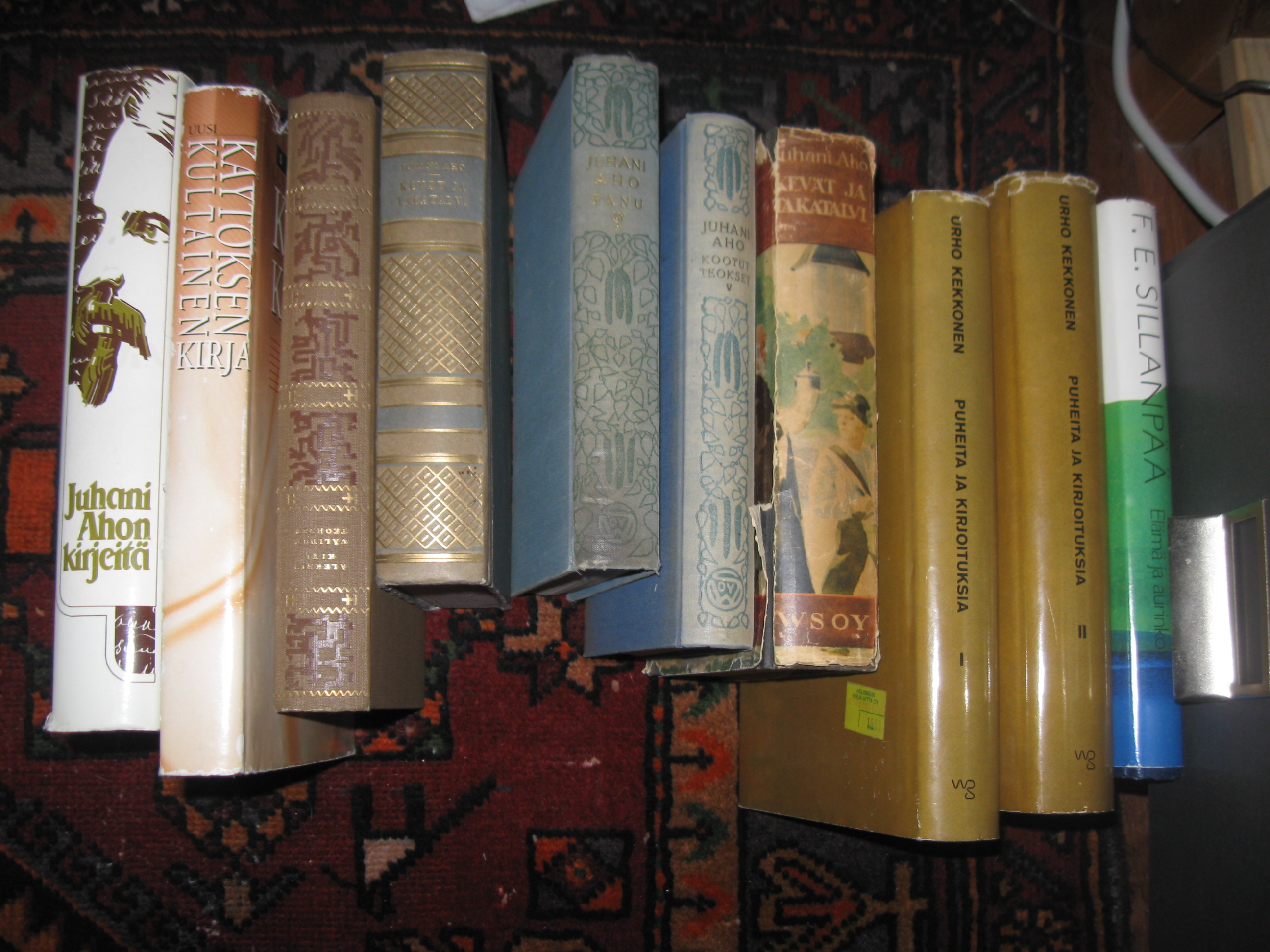
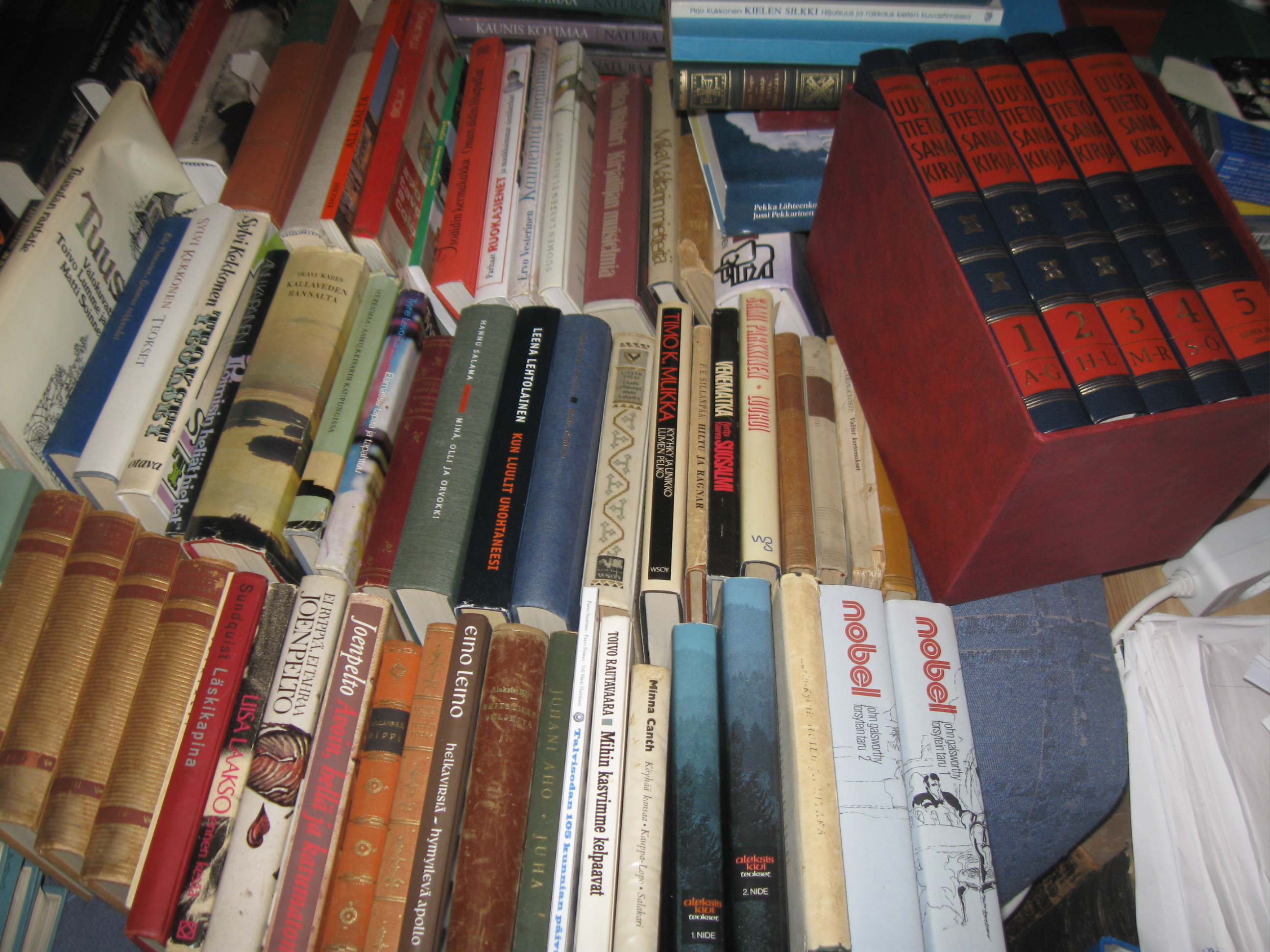
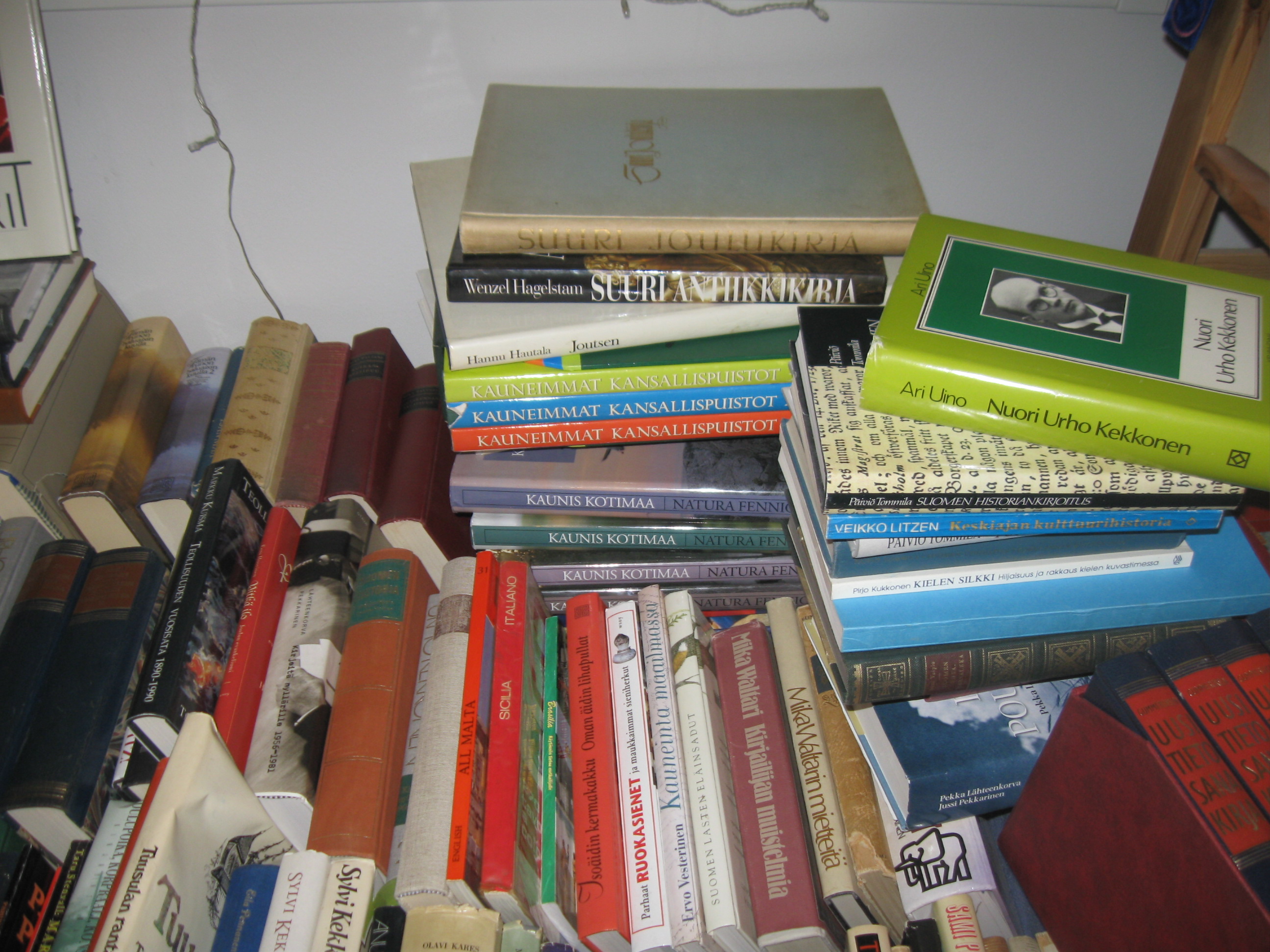
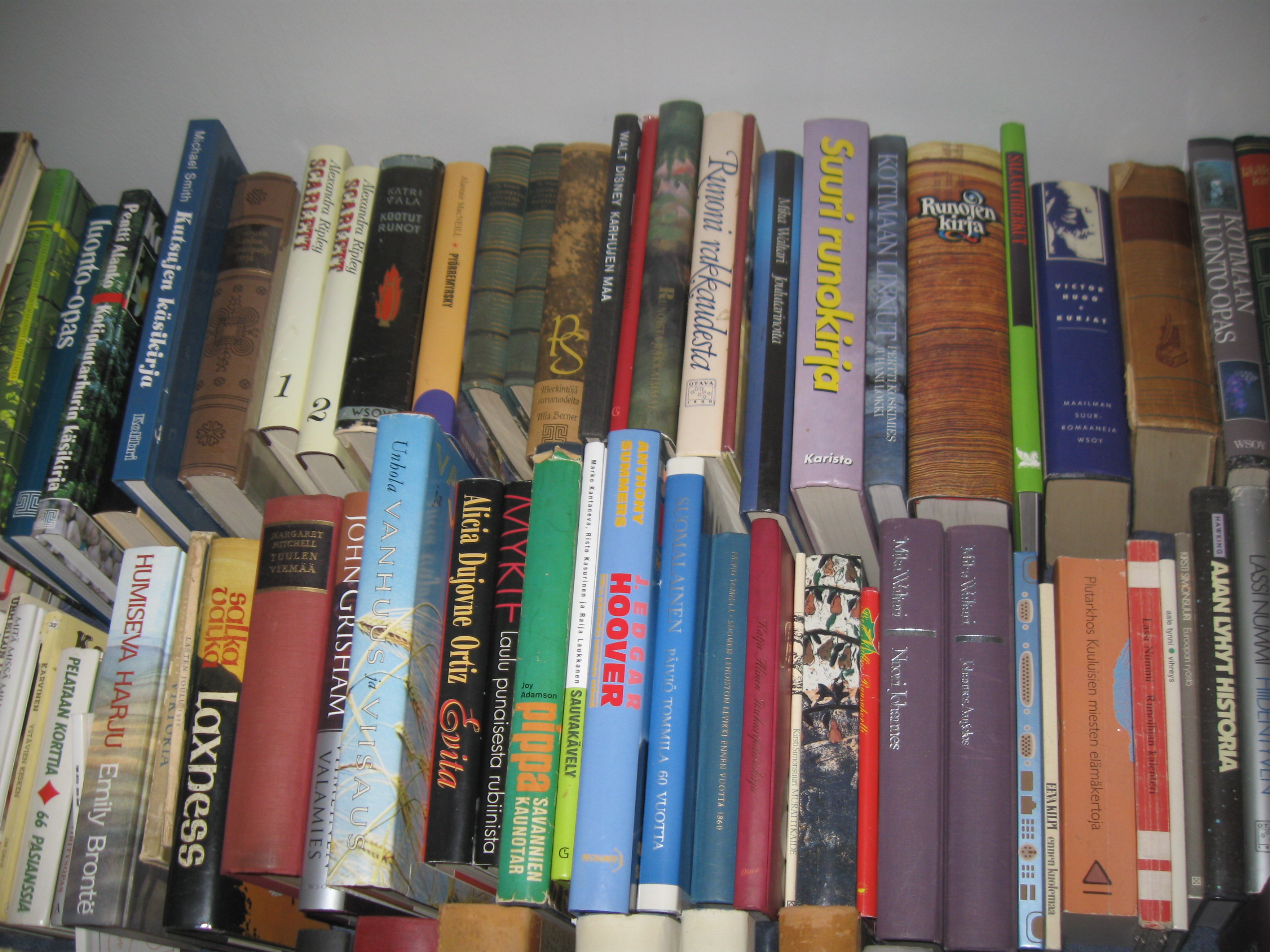
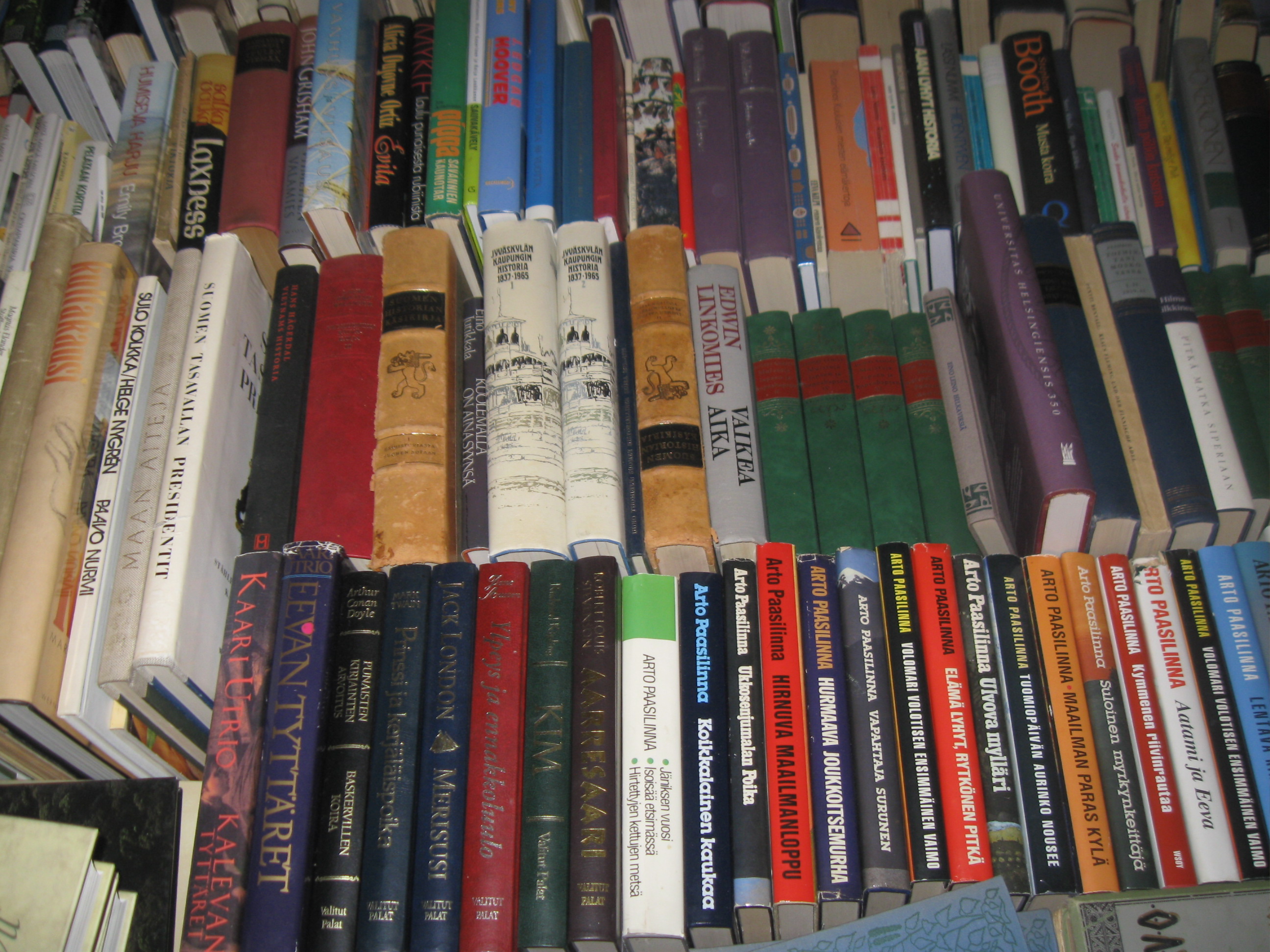
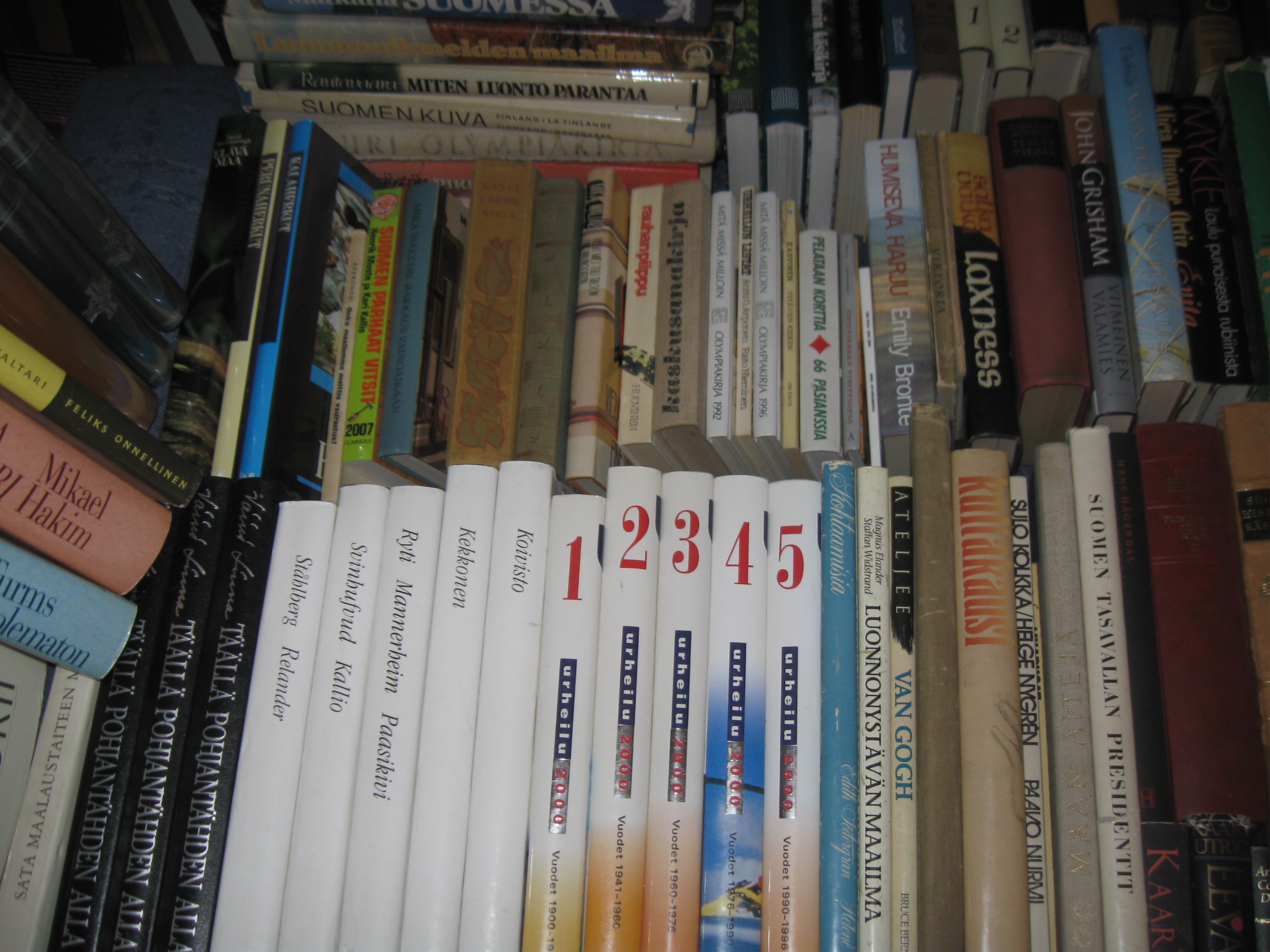
    Elämme muutoksen aikoja. Hyllyt liikkuvat, niin myös niiden sisältö. Hyviin koteihin on tarjolla proosaa, lyriikkaa, muistelmia, pakinoita, kuvakirjoja, tietoa, taitoa ja Jyväskylän kaupungin historia osat I ja II. Ja genrehyllyjä ei vielä edes ole alettu katsella sillä silmällä…

    IMG_2182


    043 044 045 046 
    048 049 050047


  • Book backlog

    by

    Posted by Sari


    David Leavitt: Indian Clerk

    I don't know if it really is a recent phenomenon, but I have a sort of gut feeling literary historicals fictionalising the lives of real people might be in vogue. (Wolf Hall, Arthur and George, True Story of the Kelly Gang…) In these novels the authors seem to be adhering to historical facts as we know them, and imagining the interior lives of the subjects based on what sources and research there is. It is a strange balancing act for an author, and for a reader – especially one interested in the history behind the characters – it is a reading experience full of caveats.

    Leavitt's Indian Clerk is firmly in this category. It tells the stories of a Cambridge mathematician G.H. Hardy and his colleague Srinivasa Ramanujan, the Indian clerk of the title. In early 1900s Ramanujan writes to Hardy from Madras telling he is very near of solving Riemann-hypothesis and when Hardy and his colleague Littlewood bring him to England, he becomes an instant sensation, ”a hindoo calculator”. Unfortunately, the devout Ramanujan is trapped in England by the First World War and his health deteriorates badly, partly because of misdiagnosis and the difficulties of maintaining a nourishing vegetarian diet in war-time England, and he dies shortly after returning to India.

    Unlike many other american novelists Leavitt has an understanding of the meaning of class in British society and Indian clerk is both a sensitive and insightful portrait of Hardy, and an examination of class and race in early 20th century Cambridge. Hardy and Ramanujan have very little in common beyond mathematics, and Hardy almost wholly fails to understand his colleague, even though he – both fictional and historical Hardy – describes meeting him as the one romantic incident in his life. That disconnect and – on the other hand – the connect the men share when talking about mathematics works well, espcially when viewed in contrast to the larger societal questions the novel examines. Leavitt isn't quite as succesful with the structure and plot of the novel which does leave a reader feeling little aimless.


    Megan Whalen Turner: The Thief, Queen of Attolia, King of Attolia, Conspiracy of Kings

    Turner's series of YA fantasy novels have for quite a while been among my favourites, the kind of books I reread every now and again as comfort fic because they feed my id. The Thief and Queen of Attolia were published some time a go, and in the past few years Turner has returned to her world with two new novels. The Thief turns on a narrative sleight of hands which is either clever or irritating depending on what sort of reader you are, and even stating this is a bit of a spoiler. Queen of Attolia is a very strange romance mixed with war maybe war mixed with strange romance, and King of Attolia a straight sequel to that. Conspiracy of Kings is a parallel novel to King of Attolia where another character from the Thief gets mixed up in a coup in a neighbouring kingdom.

    Turner's fantasy world is refreshingly not a pseudomedieval one, but one riffing off from ancient Greece and its city states. The world is well-imagined, though I am not a great fan of the ”folk tales” she frequently inserts to her novels to created depth and further a point. The plots move nicely and there is plenty of conspiracies, war and action but also engaging characters and human relationships.

    My absolute favourite, and the one I return to quite regularily, is King of Attolia because it utilizes one of my favourite tropes in all fiction: looking at familiar characters through the eyes of a new one. Here the Queen of Attolia and her newly crowned King are seen through the originally quite hostile eyes of a member of the Queens guard who slowly begins to understand his monarchs and their difficult relationship.


  • More indian movies

    Posted by Sari

    Kaminey

    Vishal Bhardwaj is famous at least in the west mainly for his Shakespeare adaptations Maqbool and Omkara. In Kaminey he takes the ever popular Bollywood trope of identical twins, adds a surprisingly modern take to the love story, some bad ass ganstas and a lot of influences from Guy Ritchie films. In the film, the good twin Shahid Kapoor, who works for AIDS prevention non-profit, finds out that girlfriend Priyanka Chopra is pregnant. After his sadly very true to life caddish first reaction (abortion is murder, I am not going to be responsible, is it even mine) he decides to marry Priyanka. Unfortunately Pryanka’s brother is bhai in both meanings of the word – brother and gangster – and as ultra national maharastrian is less than happy to see his sister marrying a man from Uttar Pradesh. The Bad twin Shahid Kapoor is a bookie and small time criminal who accidentally ends up with a guitar case full of cocaine, and gets chased by police and the drug dealers both. The plot twists and turns bringing the brothers together in a great climactic shoot-out at Bhope bhais compound. I loved Kaminey. It was carelessly violent in the way Indian movies often are, but the plot was satisfyingly twisty, the dialogue was great, the love story was true, and Dhan Te Nan is a great song, nevermind the Misirlou influences. Definitely on my top ten Indian movies list, this.

     Love Aaj Kal

    In Love Aaj Kal we meet Saif Ali Khan and Deepika Padukone, young desis living the modern life in London. When work separates them, they decide to break up instead of having a long distance relationship, but during the film they find out they really can’t get the other out of their mind. Parallel to the modern story Rishi Kapoor tells Saif Ali how he romanced a beautiful Indian girl in the 1950s India. I wonder if this would be a good portal movie, at least for romance-reading westerners. The movie has very much a feel of a straight up romance with some misunderstandings, angst and also some typically Indian concerns about tradition versus modern life thrown in. I found it nice but forgettable. The most memorable thing was the Brazilian model Giselli Monteiro as Rishi Kapoors love interest, she was adorable as the quiet demure Harleen.

     Eklavya

    Eklavya was again one of the non-masala movies. It is still very indian in the sense that it goes for big drama, but there is only one song and its length is comparable to western films. The genre is nearer Shakespeare than anything else, though there is a Mahabharata story in the background. Eklavya is a story of an rajasthani princely family, living their lives pretty much untouched by the modern world. When the queen dies, the son of the family (Shaif Ali Khan) returns from the west and ends up in the middle of both a family tragedy and the tension between modern and historical way of life. In the course of the film both he and the faithful captain of the guard Eklavya (Amitabh Bachchan) have to make difficult choices that will force them to choose between love and duty. Eklavya is a film that is wholly carried on the formidable shoulders of Amitabh Bachchan, and he delivers a powerful and restrained performance which must rank among his best. Shaif Ali – whose career’s stand out performance was as the Indian version of Shakespeare’s greatest villain, Iago – also delivers, and the scenes he shares with Bachchan are pure gold. My only quibble was that if you cast Sharmila Tagore and Shaif Ali Khan as mother and son (as they are in real life), it would have been nice to see them together.

     Dil Bole Hadippa

    Dil Bole Hadippa had two things going for it. Firstly the male lead was the adorable Shahid Kapoor, and secondly Rani was going to dress up as a man. See, Rani is a small-town girl working in his uncle’s dance theatre near Amritsar. She is also a hell of a cricket player, “left and right batsman”. When the town’s team looses for the umpteenth time to a team from Lahore in a friendly, team’s sponsor Anupam Kher sends for his son Shahid who is a pro in England. Shahid begins to put together a team, but as a girl Rani does not get past the gates of the cricket ground on the try out day. So she dresses up as a boy and gets in. Shahid, of course falls for his new player’s “sister”, and understands the ruse only when the crucial game is already being played. Again, we are in the full masala territory: “Dil Bole Hadippa… is set, in a mythical Punjab where fields are always swaying in the wind, colourfully dressed men and women are always waiting to break out into a vigorous dance, and everyone cheerfully chomps on sugar cane and drinks lassi.” This is big, colourful, a bit patriotic and fun sporty romance with a message about women’s equality. Shahid was great, Anupam Kher wonderful and Rani actually managed to pull off the drag most of the time. Also she and Shahid were a much better jodi than I would have ever imagined. Also, unlike in Lagaan I actually managed to understand something of the cricket. Me liked.