Eating Muffins

Halme Polvinen Family Collective. You will all be assillymated

Category: Figure Skating

  • Posted by jukkahoo

    Huomasin taannoin, että Netflixiin oli ilmaantunut In from the Cold, mutta jostain syystä päättelin erheellisesti, että kyseessä olisi ollut John Le Carrén kylmän sodan aikaiseen agenttiromaaniin perustuva "samanniminen" elokuva vuodelta 1965. Jonka, kuten toki elokuvankin, nimi on The Spy Who Came In from the Cold ja joka on osa Le Carrén Smiley-tarinoita, joista olennaisin esimerkki on mestarillinen Tinker. Tailor, Soldier, Spy, koko lailla missä tahansa muodossa: kirjana, tv-sarjana tai muutaman vuoden takaisena elokuvana.

    Jälkituotannossa saan huomata, että "muutama vuosi" on jälleen kerran yli 10 vuotta. Tomas Alfredsonin TTSS tuli jo 2011. Aika rientää.

    Mutta tällä kertaa oli siis kyse tuoreesta (so. 2022) tv-sarjasta, jonka nimi on tietenkin samalla kylmän sodan retoriikkaa ja samalla homage Le Carrén teokselle. Elämme tätä päivää, jossa new jerseyläinen kotiäiti Jenny saapuu Madridiin tyttärensä Beccan taistoluistelujoukkueen mukana osallistumaan maailmanmestaruuskisoihin(!). Tarina lähtee saman tien melko huolella liikkeelle, kun CIA:n operatiivi kaappaa Jennyn ja väittää tämän olevan legendaarinen neuvostoliittolainen salamurhaaja "Kuiskaaja", Anya Petrova. Näin tietenkin on ja Jenny/Anya suostuu avustamaan CIA:n heeboja, koska muuten suuntana olisi valtion majoituspalveluihin tutustuminen ja tyttären sosiaalisen elämän kokonaisvaltainen kurjistaminen. 

    On tavallaan melkoisen mielenkiintoista, miten In from the Cold on samaan aikaan vauhdikas ja staattinen. Se on myös nokkela, hauskahko, oivaltava, mutta myös tönkkö, huonosti näytelty ja budjetiltaan melko vaatimaton. Ja pahimmillaan se antaa erittäin voimakkaita eurooppalaista tv-yhteistyöviboja, joka on aina ollut vähemmän toivottava asia. 

    Sarja lienee kuvattu aika lailla Espanjassa ja iso osa näyttelijöistä on todennäköisesti paikallisia, mitä nyt mukaan mahtuu aika monta venättä äidinkielenään murtavaa. Mikä ei ehkä erityisen ihmeellistä ole, ottaen huomioon, että tässä ollaan kuitenkin tekemisissä idän suurvallan eri aikakausien kanssa. En tosin oikein ymmärtänyt, millä perusteella porukat juttelivat toisilleen englantia, espanjaa, venäjää, kiinaa jne, kun kieli vaihtui samassa kohtauksessa, ihan aiheesta tai puhujasta riippumatta. Toisaalta kielen vaihtelu toi kohtauksiin toisinaan aika lailla lisää pontevuutta. 

    Juoni ei ole kummoinen, espanjalainen äärijärjestö aikoo tappaa pääministerin, CIA:n tyypit pyrkivät estämään tämän Anyan avulla, mutta mys paljastamaan taustalla häärivän rikollisnero Gideonin, jonka henkilöllisyys ei pitäisi sarjaa muutaman osan katselemisen jälkeen pitäisi olla kenellekään yllätys. Tarinaa höystävät takaumat Anyan "uran" alkuun, jossa hän kokee niin surua kuin murhetta, tuskasta ja pahemman laatuisesta fyysisetä kivusta puhumattakaan. Tämä on aika väkivaltainen sarja ja sen toimintakohtauksissa on tiettyä brutaalia uskottavuutta. Jota lisää se, että sarjan päähenkilö Anya (Margarita Levieva) esittää kylmää salamurhaajaa ja ahdistunutta äitiä melko onnistuneesti. Kaiken väkivallan ja salamyhkäilyn ohessa sarja on aika voimakas perhekuvaus äideistä ja tyttäristä. Tunneskaala liikkuu kivasti moninaisiin suuntiin.

    In from the Cold ei ole täydellinen, mutta se pysyy yllättävän hyvin kasassa, jopa aivan hassujen Europol-osioiden, taistoluistelun MM-kisojen (hah!) ja voimallisesti vastenmielisen miespääosan (kelpo limanuljaska Cillian O'Sullivan) yrittäessä parhaansa saadakseen katsomiskokemuksesta mahdollisimman hömelön. Lopussa annetaan ymmärtää, että ei tämä ollut tässä, mutta olisin kohtuullisen yllättynyt, jos tämä saisi jostain rahoitusta toiselle kaudelle. Sitä paitsi sarjan viimeinen kohtaus on tarkemmin mietittynä erinomainen.

    Ai niin, tämä on myös scifiä/supersankarisarja, Anya pystyy nimittäin muuntumaan keneksi tahansa, kunhan hän koskee tätä ja "saa" tällä tavalla kohteen DNA:n itseensä ihokosketuksen kautta. Ja osaahan hän myös muuttua näkymättömäksi hieman kameleontin tavoin.  

    Päivän juoma on Hiisi-panimon Lempo White Grape Sour. Oma suhteeni Hiiden oluisiin on ollut vähemmän onnellinen, kaikki tätä aiemmat tarjoamukset ovat olleet jonkinlaisia pettymyksiä, mutta tämä 3,5%:n hapanjuoma on oikein mainio. Raikas ja happamuudeltaan ei sieltä ärhäkämmästä päästä, mutta ei aina tarvitsekaan. Kyllä tätä toisenkin pullollisen joisi. 
  • Posted by Sari


    Josef
    Sabovcik
    almost got it in 1986. Kurt Browning performed the first ratified one in
    1988. Elvis Stojko made it routine, and for the generation after it was the element that marked the difference between
    first and second tier competitors. Then came
    Salt Lake City, and the new judging system which
    was is good at evaluating separate elements and had different criteria for the whole. Suddenly instead
    of doing one of each triple and two combos, people were experimenting with all
    sort of jump content to maximise their  points, and also developing more and more
    difficult spins, steps and spirals to pick up techincal points from non-jumping
    elements.

    So should
    it be about the jumps, more specifically about the quad? That is what this
    olympic cycle in men's figure skating came down to. There are a number more or less influential people who
    feel that Evan Lysaseck was not the worthiest champion because he did not even try a
    quad, and – more importantly – that the risk/reward ratio for trying a quad is
    stunting the sport.

    At the
    moment there do not seem to be skaters who can combine a solid quad with
    complex choreography and difficult transitions. If you spend time perfecting
    the other elements and if you make jumping more difficult for yourself by
    having difficult transitions, the quad will suffer to the extent that it is
    tactically wise to leave it out. Fully rotated but fallen quad will still
    garner good points but if it is deemed underrotated or if the skater “triples
    it” the loss of points is significant. So we have skaters – most famously
    Plushenko and Joubert – who have front-loaded programs with easy transitions
    and quadruple jump(s), and skaters who pick up points from complex
    programs. 

    So I am
    just hoping Daisuke Takahashi who was the only one to skate all out and project
    to audience, and Takahiko Kozuka who is just a beautiful all-around skater with
    gorgeous edging and jump technique will get it togeether and offer us the whole
    package.

  • Posted by Sari


    Sorry for
    the long silence, I have had a nasty carpal tunnel syndrome on both hands, and
    thus have not wanted to strain them with tapping away at the computer other
    than work-things.


    I’m so glad
    the next Olympics will be nearer my time zone. This getting up at three or four
    a.m. is really not my thing. That said, compared to
    Torino the broadcasters have gotten more
    internet savvy and bandwidth has grown so that at least for me, these are the
    first winter olympcis where I am not dependent on broadcasters for what to
    watch and when. There are number of feeds from TV-stations to choose from, not
    to mention EBU’s marvellous streaming service. Now, if only the rights to
    replay could be settled so that I could rewatch my favourites I would be a
    happy camper.  Because this is also first
    skating season when I do not have means to record the performances myself.


    But to
    business, i.e Olympic Pair Scating. I have only one real gripe with judging,
    though I do not agree with the end results. The gripe is the points awarded –especially
    in the short program – to the homer team Dube/Davidson. I find they have very
    good posture and great edges, but they made so many mistakes that their total
    after SP was about 10 points more than it should have been. Most erroniously
    they had positive grade of execution scores for their step sequence where
    Davidson visibly stumbled. There need not to be anything more sinister than the
    fact that judges tend to be more generous to home skaters and that audience
    excitement will inevitably influence the panel.


    The rest of
    the results were completely defendable and I am a minority opinion. I don’t
    think the chinese have nearly as good skating skills, transitions or
    choreography as the germans. I also think that in the throws and the twist,
    which garner such accolades for chinese teams, judges should pay more attention
    to the form of the man at the trows and at the landing of the twist. Based on
    that I would have had germans at least closer despite their mistakes. My last
    point is wholly subjective and thus should not be a factor, but of course it
    is: I have never gotten Shen/Zhao. I acknowledge that they progressed leaps and
    bounds from 1999 when I saw them live but they never sent shivers down my
    spine, not even with their “masterpiece”, 2003 Turandot which I found
    technically rock solid but quite boring. I prefer Pang/Tong, but they don’t
    really do it for me either. Savchenko/Solkowy on the other hand really rock my
    socks. So bummer for Aliona and Robin, also for the Russians Kavaguti/Smirnov with Yuko's constantly dislocating shoulder.

  • Posted by Sari

    When I have been home I have been reading essays, and thus
    not blogging about my birthday present, but today thre is a nice two hour break
    between dance and men, and the arena has WiFi for reasonable price, so here
    goes:

    Dance is m favourite discipline, even though I do think that
    COP is really problematic for this particular branch of figure skating. I
    honestly don’t think spins and shadow skating are what dance should be about.
    Anyway. The compulsary dance, as all people who read papers in Finland know was
    Finnstep, a quickstep based on Rahkamo/Kokko rythm dance from 1995. As it is
    completely new dance, and most of the couples only started rehearsing it after
    the draw was made, it really separated couples. Bad were really, really bad and
    even the good were rough around the edges. It is an interesting and really
    difficult dance, it demands both smooth edges and bouncy expression. I thought
    the best were Khohlova/Novitski, they were excellent especially on the first
    half of the dance. My other favourite here was Carron/Jost who scated a smooth,
    bouncy dance and held the rythm better than any other team. I was a bit miffed not to see them
    higher.

    Today was original dance, the prescribed rythms being
    ballroom from 1920s to 1940s. This meant at least three sing sing sings, Bei Mir
    ist du Schöns and Minnie the Moochers. You’d think there are more foxtrots,
    swings, lindys and blues in the world…

    My favourites continue to be the Kerrs. They had great expression and as they are the crowd favourites, their energy fed back to their performance.
    It has to be noted that boy Kerr made few mistakes, and I thus was a bit
    surprised that they remained ahead of Pechalat/Bourzat who had a nice and
    smooth though unmemorable OD. An other team the really wows me are Carron/Jost.
    I loved their OD last year I think their technique has improved leaps and
    bounds. Among the disapointments were Kholova/Novitski. I reall don't think that lime green tulle is really the way to go dresswise, and the dance itself seemed competent but pretty forgettable. I was not
    terrbly taken with Capellini/Lanotte either. Smooth, technially good and
    increadibly boring.

    No changes in the top half of the leader board, and some of
    the changs lower down are caused by Domnina/Shabalin withdrawing.
    Hoffman/Zavozin cambe down because Max stumbled, which is a bummer, it was a
    good dance. Lithuanians stormed up from 15th to 8th with a nice dance, I
    especially liked the entries to their lifts.

    Next up, dinner and Men’s Free Skate. 

  • Posted by Sari

    Nice things about the new flat: state of the art internet. Just plug the cable in and hey presto: broadband. Also, two computers so Jukka can escape to the library room and I can take the lap-top and watch skating and surf in the living-room. Now if I only would manage to get the wireless network to work. For some reason I keep getting the "vajaa liitettävyys" error message.

    Anyway, skating. World Championships. I went and got cable just to get Eurosport coverage, though I have to give props to YLE: they had live streaming on internet available of lower ranked couples in the Free Dance. Way of the future, I think. Eurosport has one advangage over YLE, though. They broadcast in four languages which means I can choose Danish which I really don’t understand that well and thus not get annoyed over the commentating.

    As far as actual competition goes, I love the fact that there are more and more countries sending in skaters and also getting near the top. Russia goes home from these championships with one bronze and USA failed to get three spots for women next year. Instead we have medalists from countries like Korea and Italy.

    I actually have no squabble with judging in this competition, expect for the the deduction Joubert got in the short for having vocals in his music. As he had performed the program in international competitions this year without deductions, I think it is plain wrong to penalise him now.

    My favourite perforances came from Pechalat/Bourzat who had great flamenco OD and great high-concept FD, Yu-Na Kim who is first lyrical skater ever whom I really love and Joannie Rochette whose short was well performed and coreographed. Lambiel’s programs could have been great without his stumbles and Browning has really done well for Joubert, first time I rooted for him and so much I nearly couldn’t watch.

    Also I  really, really think all three of Shpilband’s couples shoud get choreography from somewhere else. At the moment Virtue/Moir and my absolute favourites Davis/White succeed despite of their programs not because of them. Both teams have the skills and charisma to be legendary, but the programs really let them down.

    All in all, good championship.

  • Posted by Sari

    I am feeling really good about these olympics, which is a nice change from SLC, where there was a huge judging controversy involving pairs and dance where I really liked the winners, and the gold in other two disciplines went to skaters whose skating I actively disliked. There is some dramatic irony in that I don’t think either Sarah Hughes or Sale/Pelletier would have been gold medallists if the 6.0 system had wanted the same things from the skaters than Code of Points…

    Anyhow, this time around: much better from the emotional point of view. Some general observations.

    1. For all the three skating disciplines COP is working better than the old system. There are problems aplenty, but nothing that could not be fixed by tweaking and honing the system.
    a) forest from the trees -problem. As COP’s technical portion marks individual movements and the level of difficulty in spirals and spins is achieved by having as many positions as possible, there have been lots of "disjointed" and hurried programs where the elements have been crammed in without really giving room of the choreography to grow. It is however possible to create a beautiful, organic performance while complying with the new rules, just ask Matt Savoie.
    b) Component mark problem. There are five component marks, all of equal value. Skating Skills, Transitions, Performance/Execution, Interpretation/Timing and Choreography. Judges very rarely if ever give marks that are more than .75 apart in any of these categories. If a skater has gorgeous skating skills, zero transitions, great lines and pedestrian coreography that should be reflected on the scores. This is a problem which will not go away without constant re-education of judges: it is wrong, wrong, wrong to use component marks for protocol judging and you should be slapped on the fingers for doing it.
    c) The splat or not problem. COP is a system which really dings underrotated jumps. This has meand that men are less likely to try quads. An underrotated and fallen quad is just a risk not worth taking when the amount of jumping passes is limited. Similarily, women are less likely to try triple-triple combinations. They are riskier and if your second triple in the combo is more often than not downgraded to double anyway, why even try for the riskier element when – again – the number of your jumping passes is limited. This is a problem which either stays or goes away. The next generation of skaters may be better at doing these tricks cleanly and thus have no problem including them. Or they may think that the risk/reward ratio will continue to be iffy and keep it safe. In that case, the rewards for doing riskier elements should be upped.
    d) The Technical Specialist problem and the secrecy problem COP is asystem where there sometimes is ten points separating first and second, sometimes 0.01 points. Thus the person(s) who are punching in the sekrit komputer the levels and rotations are in key positions. It is theoretically quite possible for two people in cahoots give a little extra or chip a way from the elements scores of any given skater. Also even if block judging is pretty much impossible, biased judging is easier than ever. There are two answers to this problem. Either change the system, or make it transparent. Now fans are left with the rulebook in one hand and the protocols in other and in many cases really not making sense.

    I do think COP can and should evolve all the time, making a rule, seeing what effects it has, modifying it… There should be a hefty bonus for completing all triple jumps in a program, there should be other positions considered difficult than Bielmann, Skating skills and transitions should be worth more than choreography (which, after all, is actually not something the skater has done)… But even with all this, singles and pairs are so much more interesting to watch than under 6.0 system. I see steps, and spins, and difficult entries to the jumps… you know skating.

    Unfortunately, quite the opposite is true in Dance. The trend was there before COP, but the new system  has given the final blow to my favourite discipline.  Spins, lifts, twizzles, side-by-side steps with break neck speed – why not just call it adagio pairs and have done with it. I am past caring.

    As for the results the fangirl in me says:
    Petrova and Tikhonov did it for them selves.
    If only Zhao had nailed that toeloop…
    Zagorska/Siudek were a joy.
    Jay for Plushenko and Buttle.
    Savoie rules.
    Arakawa was phenomenal.
    Awww for Slutskaja.
    I am not so sekritly elated that Sasha splatted (her skating personifies everything I dislike in women’s skating).
    Pocket and Beanie were shafted, I tell you, shafted.
    Love Ben Agosto’s skating but boy, that flamenco? Ew.
    Feeling begins with white pasties? What were Grushina and Goncharov thinking? And that won bronze?


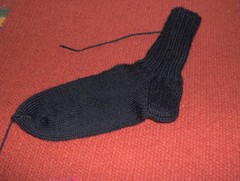
  •   olympiasukka nro 1 
      Originally uploaded by ssssari.

    Tai oikeastaan jo kaksi, ekan kanssa testattiin vähän kokoa ja käsialaa niin että siitä tuli sukka minulle. Tässä kuitenkin virallinen sukka numero yksi. Ei kun eteenpäin.

    And as far as skating goes, I am just saying that the new system makes it a whole new ball game, the priorities are totally different. In men’s competition it seemed like skaters with gorgeous basic skating and good choreography get benefits even though they fall, while in pairs sloppy basics and bad unison was rewarded with silver. Maybe it is a question of degrees.

    Also, can I just say that I so would want not to love Sandhu’s skating. Life would be so much easier…

  • Posted by Sari

    I’ll say this for the new judging system – it gives a lot to analyse! Olympics opened with pairs short, and a very high standard one at that. Tatiana and Max were just the class of the field today, no question. Elements were crisp, clean and gorgeous, the program was a skating clinic in pair skating – someting I thought I would never say about them.

    The rest of the field is really close. There is about the same difference between 1 and 2 (3.92 points) as there is between 2 and 8 (4.47 points). Thus the placements are really not that important. Still, I do think that judges use the component marks for protocol judging. As far as the judging is concerned we could still have just one “presentation” mark,  all the five components are usually within one point of each other, and I don’t think they necessarily reflect what was going on on the ice.

    Props for Inoue and Baldwin landing a throw-triple-axel, a first in international competition (they did one in US nats this year). It is difficult to see how the throw could have been cleaner and even so one judge gave it -1 GOE. They had the second highest element mark but were (unfairly, IMO) dinged in the components which kept them down.

    Props for Shen and Zhao for showing up and skating as well as they did as Hongbo is just coming back from a serious achilles tendon injury. They do have the “it” –factor, but they were given a some world champions extra in the components.

    Props for Petrova and Tihonov for the best coreographed and performed program of their careers. The souped up Händel’s Sarabande Smalun first introduced to skating works like a charm and they were fast, crisp and had the lift of the competition. I know I am biased but even so, I think it is a crying shame that the sloppy chinese are ahead of them.

    And finally props to Savchenko and Szolkowy for overcoming the media storm around Ingo and skating their perfectly COP-designed programme with flair. They should have been rewarde better in the skating skills and transition mark.

  • Here we go: Experimentation in pseudo-live blogging. Polvinen sisters are sitting in Mekku’s living room with a broad-band connection and watching men’s short programme.

    Warm-up group 3:
    Welcome to Studio 54.. (or some such..) Gheorge boogies to 70’s cool. Nice development with step sequences and spins, but mistakes on jumps.
    Urbas seemed like a 70’s throwback skating to 80’s music (Phantom) – what is this retro-virus going around? Again, problems with jumps but spins better than before, steps not so much so.
    Lukas Rakowski: Again, excellent spins and clean jumps this time, but boy does the boy need more presence. But I doubt his performance score will be much lower than his technical as the judges still won’t differentiate properly between the points they give for skating skill and artistic expression. (Hah! Interpretation was his highest mark…)
    Danilchenko: what we noticed most was dear old Zagorodniuk in a Zorro-beard… Ahem. Too much content packed in the beginning of the programme, and the problem with Zorbas as a music to skate to is that you are very likely to look slow, as the music is SO fast. As did Vitaly.

    Warm-up group 4:

    Young italian guy, Paolo Bacchini, skating to Pink Floyd: waxel,  OMG He did a Midori! And he is all bloody, hurt his hand the poor thing. Props for guts though. I think he has good basic jumping technique, his spins are centered but a bit slow…
    Viktor Pfiefer from austria in gold-net shirt skating to Cirque du Soleil very clean jumps, nice triple toe to lutz, high and clean. Speed dies a bit towards the end. And that shirt, Carson would think that is too gay…
    Trifun Zivanovic! Good old Trifun, Yank turned Serbian. And Carmen. I was waiting for Carmen. Ther must always be Carmen. It is a rule. And saved the axel after botching the combo. Lutz was from steps…
    They must have hired the same Luigi guy who made such a mess of Ice Hockey in Lugano in 1994. Show us feet or show us the whole body but why show us empty ice with an occasional elbow…
    And we continue with a rent-a-russian, Roman Serov of Israel. Some romantic music with beat in the backround. That must explain the puffy sleaves with glowy stripes. Nice entry to the combospin in the end…
    Little Stephane the spinmaister: a waxel! awwww. Yes, the first quad of the evening and in combo too. And this is defenitely in a different class from everybody we have seen so far. Gorgeus spins! And the change of foot in that spin! How does he do it? I am going to forget the waxel and just drool over the rest of the program…
    Next up, the little hobbit, Lindemann of Germany. Last year’s program. He even looks a bit like Dom with those sideburns. Fell out of quad, otherwise clean but not that special. We think his transitions should be much lower than Stephane’s.

    Warm-up 5:
    Kristoffer – boy-next-door: Fought for a triple axel, well-done, but double-footed his lutz. Again hung on like grim death on his flip. Nice entry into sit spin, but otherwise unremarkable coreography.
    Plushy.. Plushy! Turn in the combo but otherwise clean – a bit of a battle with the landing of the axel as well. No bielman but spins quicker than before – plus the haircut: a definite improvement! And Mishin almost smiled…
    Dobrokhodov. Get a new tailor. Oh dear. Nyah is a bit of a corageous choice for music after Kurt and Plushy – and by God he does a Bielmann too!  So a Plushy-wannabe, down to the costume. OK he is very tall, so jumps are particularly tricky. Fell on lutz and had a rather embarrasingly bum-up sit spin.
    Juan from Spain: fell on all the jumps and speed dies totally towards the end. Hm. Zzzzzzz. Only seventeen, though.
    Babu is the devil, we think. Dresses like one, at least. Only a double tl in combo. OK axel and great flip but still has to work on spins and linking steps, and still has trouble developing speed in steps without running on toes. Straight-line finished with good one-foot turns and the final combo spin begun neatly backwards. Leads, but shouldn’t.
    John Hamer: nice jump technique and Michael Weiss blades on his skates. Combo double lutz triple toe. Does the heel-spread-eagle during the step sequence and comes down nice and low in the sit spin but camels are shapeless.

    Warm-up group 6:

    Kevin VDP scates techno.  Stadion techno. He has exit in his back. Don’ ask me why. Not enough energy for the music but cleaner than usual. Apparently he hurt his back in rehearsal and skates with painkillers…
    Sergei Davidov scates to Bolero, oh no. Isn’t it enough that the Kween skates to it. At least this is fun-ky version it has “you really got me” mixed in it.  Weird, very weird. So weird that I did not much concentrate on skating…
    EEEE! Murvy! And Is Zhulin his coregrapher or coach, even? He is very bluesy, Murvy, not Sasha. Great axel from almost standstill. Salchow combo, I wonder if he has been rehearsing quad? Because his solo was supposed to be Lutz not quad-toe he has been doing (or trying). Dang, he is nice towatch but his jumps let him down again.
    Maciej Kus from Poland skating to Cirque du Soleil. He is all snakey and oriental. Actually pretty good music choice for him, very juniorish but not bad, maybe next year.
    AP goes Tango. problems with the toe after lutz, fought for the flip, nice tangoey steps, slow spins, and did he jump axel somewhere? Yay, he got into the long program, well done.
    And the show closes with ponytail-wearing turkish skater! He is my new favourite, does not matter how he skates – go him and Tugba! Okay, he is not that great. But come on, a skater from Turkey, with a pony-tail. He should get points for just that. But he is last, poor Alper.

    Well, that is it. Not very high quality, no clean skates at the top. And Gwendal is being really Bitchy in the interview.

  • It’s that time of year again. Skating widowers close your ears. European championships are this year in Turin as a sort of rehearsal for olympics. Most noteworthy thing this year, is of course the new judging system. No more numbers-as-placeholders, no more OBO or factored placements. The new system is basebal fan’s wet dream: statistics, decimals and averages as far as eye can see. summary of the details can be seen here

    Basically there are good and bad things about the new system. It is still vunerable to manipulation, beacuse the component scores can be fiddled with quite as easily as in the old 6.0 system. It focuses on elements instead of the whole program and might well discourage innovation as new moves won’t necessarily get enough credit. The sekrit judging still stinks, and as judges are still uder the control of their federations, the pressure to vote certain way is still there.

    Also, one person, the technical specialist wields enrmous power. It is he who decides what grade often difficulty a certain move is. There are guidelines, but even so, one technical specialists level three spin is another’s level two spin. And the specialists are not judges but other skating pros which usually means ex skaters and/or coaches. Which means conflicts of interest galore.

    On the plus side, the new system has defenitely made skaters focus on other elements beside jumps. For exemple, the amount of thought and difficulty in the spiral sequences in yesterdays pairs’ short was staggering compared to your usual boring pair spirals. The component score also gives judges a chance to reward skaters in those particular areas they might be better than others. There is a different score for skating skills, choreography, performance etc. So if your skating skills ar magnificent, but coreography crap, that can be reflected in the scores. Unfortunately, judges haven’t so far utilised this very well.

    As for the competition yesterday, nothing much to complain about the results. I would have given Obertas/Slavnov higher scores than judges, and was really taken with Germany’s new pair. It was like watching Woetzel/Steuer reincarnated. Not that surprising as Ingo is their coach. As for Ice Dance, Golden Waltz is an excelent compulsary which really separates the wheat from chaff. Again, I don’t think Navkamarovs were that much better, they had flow and speed and edges but I thought unison could have been better.